Category: Roots in the Record

  • Visualizing Origin: Myth, Birth, and the Abstraction of the Maternal Body 

    Visualizing Origin: Myth, Birth, and the Abstraction of the Maternal Body 

    Introduction

    According to Joseph Campbell, myths are profound metaphors and symbolic maps of the human psyche that reflect universal experiences like love, adversity, and transformation. In A Hero with a Thousand Faces, he draws on archetypal imagery, including the hero, the guide, the shadow, and, especially, the mother. In his account, the mother becomes a symbolic origin point, often detached from the specificity of any individual woman, to tell stories and create living myths that transform ordinary moments into meaningful visual narratives. 

    Roland Barthes recognizes similar mythic structures across oral and linguistic histories but offers a fundamentally different account of how myth functions in photography. He contends that a text’s meaning belongs to the reader, not the creator. When this logic is applied to the realm of photography, Barthes insists that while the viewer is the meaning maker, photography’s power lies in its ability to make the viewer feel as though they are not producing meaning at all but simply encountering a self-evident truth. Photography becomes a perfect vessel for Barthes’s argument about mythical speech: the medium captures historical, physical acts and transforms them into naturalized, eternal “truths.”

    In this paper, I trace two dominant visual regimes: the sentimental and the clinical, through which photography constructs birth as a universal human experience while simultaneously erasing the mother as a historical subject. Both types of looking transform historically situated bodies into signs of universal truth. The sentimental image (Steichen) produces identification through emotion and familial intimacy, while the clinical image (Nilsson) produces awe through scientific authority and technological mediation. Despite their different aesthetics, both detach the subject from history: one through feeling, the other through abstraction. This detachment naturalizes birth as an eternal, apolitical condition as opposed to a socially structured and embodied experience.

    Steichen and Nilsson use the camera to present what appears to be a universal truth of life, yet they ultimately erase the individual woman. Carmen Winant’s collage of birthing photographs attempts to overwhelm this erasure through the sheer volume of maternal labor. Roland Barthes’s “Winter Garden Photograph” presents the ultimate resistance: by remaining unseen, his mother’s body remains her own, escaping the clinical and sentimental myths that seek to universally humanize her. Modern photographic representations of birth produce a humanist myth through both sentimental and clinical visual regimes, each of which erases the mother as a historical subject. Through the work of Winant and Barthes, alternative visual logics of excess and absence emerge that resist and expose this myth.

    Sentimental Vision and the Myth of Universal Humanity

    Figure 1: Wayne Miller, Childbirth, 1950s, gelatin silver print, in The Family of Man, curated by Edward Steichen (New York: Museum of Modern Art, 1955).

    Wayne Miller’s portrait of a baby’s delivery, included in Edward Steichen’s The Family of Man exhibition (1955), depicts birth as a moment of deep intimacy and universal human experience. The black and white photograph depicts a woman in labor, her body covered in blankets yet vulnerable to the camera’s gaze, and a masked physician, who is her husband, facilitating the birth. Sentimental myth is constructed by a meticulous orchestration of textures and light that anchors the universal in the highly particular. The physician’s mask, an intense white rectangle against a dark background, symbolizes professional authority, yet its soft fabric texture implies a tenderness that contrasts with the clinical coldness of later medical imaging. The physician’s hands, partially concealed yet engaged, maneuver amid the creases of thick, crumpled white sheets. These sheets are not the sterile, throwaway plastics found in contemporary hospitals; they possess a domestic, tactile quality, indicating a connection between the clinical environment and the home. 

    The light in the shot is directed and striking, akin to Caravaggio’s chiaroscuro, generating strong shadows that obscure the “mess” of the delivery while emphasizing the emotional bond between the doctor and child. The physician, identified as the woman’s husband, is situated not just as a medical practitioner but also as a witness. Miller captures the reflection of light on the doctor’s eyeglasses and the gentle blur of the baby’s developing head, crafting a moment in which the viewer is not a voyeur but an active participant in a sacred ceremony. Each detail, such as the fabric’s creases, the mask’s straps, and the shadows of the two gloved hands assisting in this moment, persuades the observer that they are experiencing the “Self-Evident Truth” of human creation. The “thickness” of these features enables the image to surpass its 1950s setting and function as a timeless, mythological symbol of the “Family of Man.”

    Miller’s photo serves a fundamental purpose within the The Family of Man (1955) exhibition. By positioning birth at the beginning of the showcase, Steichen delineates what he refers to as a “circle of life,” implying that all humans, irrespective of nationality, class, or historical context, are interconnected by identical biological origins. This curatorial approach converts a distinctly embodied phenomenon into a symbolic depiction of human uniformity. Roland Barthes argues in his critique of the exhibition that such representations function through myth; they remove events of their historical and social character to depict them as natural, everlasting truths (Barthes 1972, 100–102). The body of the woman in labor is effectively absent and transcends specific social or medical contexts. She emerges as a symbol of universal humanity.

    The photograph’s emotional impact is important to this process. The picture fosters a profound sense of identification through its focus on closeness, compassion, and shared experience. Viewers are encouraged to identify themselves within the scenario, perceiving birth as a timeless and globally shared experience. The photograph’s sentimental character arises from its ability to convert the particularity of delivery into an emotional feeling of communal connection.

    However, this emotive universalism comes with a price. Allan Sekula contends that humanist photography frequently universalizes experience, concealing the social and economic frameworks that distinguish people (Sekula 1981, 15). The Family of Man (1955) exhibition prioritizes a collective human experience, obscuring the disparities and material circumstances that shape reproductive experiences, such as access to healthcare, gendered labor relations, and institutional regulations governing birthing. The husband’s dual role as partner and physician exemplifies a particular mid-twentieth-century arrangement of medical authority and domesticity.

    Through this sentimental framing, the photograph participates in the production of what Barthes identifies as myth, an ideological structure that naturalizes historically contingent realities, making them appear timeless and inevitable (Barthes 1972, 142). In this sense, the photograph performs a dual operation. On the one hand, it foregrounds the physical and emotional intensity of childbirth, rendering it visible in a way that was considered radical for its time. On the other hand, it abstracts this experience from its social and historical conditions, transforming it into a myth of human sameness. The laboring woman’s body, though central to the image, is ultimately depersonalized: the photo is a symbolic vehicle for a broader narrative of universal life, not a scene of individual experience. 

    Clinical Vision and the Myth of Scientific Life

    Figure 2: Lennart Nilsson, “Drama of Life Before Birth,” Life Magazine, April 30, 1965.

    Lennart Nilsson’s “Drama of Life Before Birth,” released in LIFE Magazine in 1965, presents one of the most significant graphic representations of human pregnancy in the twentieth century. The classic depiction of the fetus, hovering in a black, boundless abyss, is frequently regarded as a success of scientific imaging. However, its artistic composition challenges this assertion of impartiality. Instead of presenting a purely clinical aesthetic, the image employs a decidedly sublime visual language: the fetus emits an ethereal light on a dark backdrop, separate from any discernible maternal form. This compositional decision reinterprets the womb as an abstract, cosmic realm, situating the embryo as an independent, nearly mythological entity.

    This visual separation is fundamental to the image’s ideological function. The black vacuum operates as a means of erasure from the mother’s body. Through the elimination of evidence of the maternal body, the image disassociates the fetus from the physical, social, and historical contexts of conception. This process generates what Roland Barthes refers to as “mythical speech,” in which historically specific facts are converted into naturalized, self-evident truths (Barthes 1972, 142). Birth is perceived not as physical work but as an abstract phenomenon.

    Significantly, Nilsson’s own narrative of his methodology illustrates the degree to which this “miracle” is technologically and artistically fabricated. In a 2001 PBS interview, Nilsson clarifies the application of endoscopic techniques, specialized illumination, and invasive methods to obtain fetal pictures, emphasizing that these images need much experimentation and technical expertise (Nilsson 2001). This description clarifies that the photos are not authentic representations of life developing spontaneously in utero but are meticulously orchestrated as visual constructs. The fetus seems independent because the representation has been crafted to create that illusion.

    According to Lisa Cartwright, medical imaging technologies do not only document the body; they actively recreate it, generating visual authority that detaches patients from their actual experiences (Cartwright 1995, 3). Nilsson’s images illustrate this phenomenon: its credibility relies on the illusion that the observer is observing an unaltered biological truth when the image is, in fact, a product of mediation, intervention, and artistic composition.

    Rosalind Petchesky has extensively considered the ideological consequences of this visual logic, asserting that fetal imaging portrays the fetus as a distinct entity, apart from the maternal body that nurtures it (Petchesky 1987, 266). In Nilsson’s photographs, this division is very explicit. The fetus’s growth is depicted as self-driving, but the maternal body remains obscured and diminished to an unseen foundation that cannot be represented within the context. As such imaging was more broadly adopted by practitioners, the results of these new modes

    of visualizing the human body came to be considered documents of objective truth.

    Nilsson’s images not only reframe visibility but reorganize medical knowledge itself. By prioritizing the visual, the skills of touching and hearing within the medical field are lost. The clinical gaze was once diagnostic through the smell of breath, the texture of skin, or the rhythm of a pulse. These are sensory data points that require physical proximity, something that Nilsson’s machines eliminate for the practitioners and viewers. Endoscopes and other medical imaging technologies create scenarios where physicians often find themselves treating the patient, in this case the mother, as a digital record and not a living person. When a doctor and a patient look at scans together, they are both looking away from each other and at the screen.

    The patient is most vulnerable when they are “unseen” as a person and only seen as a “pathology.” The machine abstracts the woman into a set of coordinates, making it easier for the professional to maintain a psychological distance, culminating in a crisis of empathy between the patient and the doctor. The mother knows her pregnancy through internal sensation, weight, and movement, while the physician “knows” the pregnancy through the digitally rendered image. When the image becomes the primary site of “truth,” the mother’s sensory testimony: her pain, her exhaustion, or her intuition, is relegated to the status of “subjective data,” which is always deemed less reliable than the “objective” visual output of the machine. The machine becomes the overwhelming authority. 

    The pervasiveness of these images changes a woman’s internal geography. Now, a woman can imagine herself as transparent. Before Lennart Nilsson, the womb was a “black box,” a site of mystery and folk knowledge. Now, women can envision their insides as a high definition, lit-up space. This erases the “sacred” or “private” essence of the interior and displays it for all to witness on the cover of LIFE Magazine.

    The image’s emotional impact derives from its ability to create both distance and closeness. Although its soft glow and intricate details inspire admiration, this admiration is essentially disembodied. According to Barthes in Camera Lucida, the image exhibits a certain “weightlessness,” separating its subject from the gravity of actual experience (Barthes 1981, 92). Nilsson’s fetus illustrates this condition: it is physically weightless, suspended beyond the confines of time, space, and human struggle. The outcome is a contradictory representation that is simultaneously clinical and sentimental. It is scientific in its technological foundations, yet profoundly mythological in its aesthetic and ideological implications. This fusion renders the photograph a portrayal of life that hides the tangible realities of pregnancy and labor, substituting them with a generalized depiction of miraculous origins.

    Material Multiplicity and the Refusal of Myth

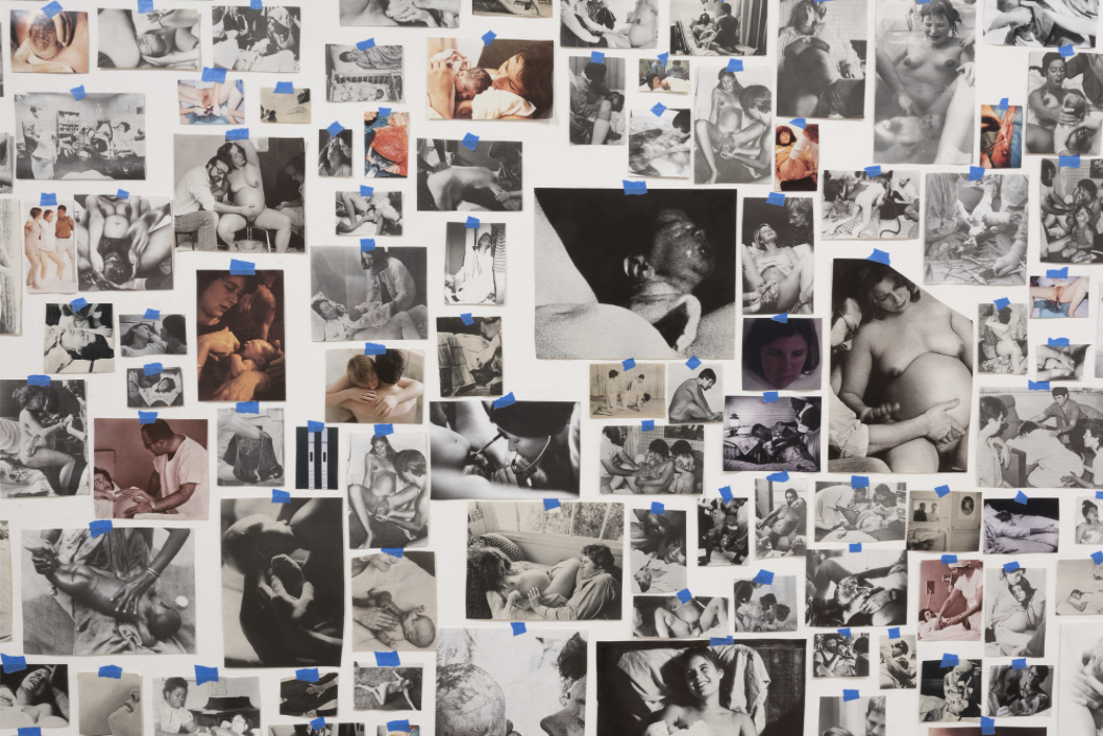
    Figure 3: Carmen Winant, My Birth, 2018, mixed-media installation, Museum of Modern Art, New York.

    Carmen Winant’s My Birth (2018) presents an intriguing contrast to the sentimental and clinical visual perspectives common to photographic depictions of childbirth. Initially seen at the Museum of Modern Art, the piece comprises over 2,000 rediscovered photographs of women in labor and childbirth. The images, derived from an extensive collection of books, magazines, and personal archives over several decades, including feminist works like Our Bodies, Ourselves, are curated into a substantial, immersive installation that floods the observer with its vastness and variety. In contrast to the solitary, meticulously crafted pictures of Steichen and Nilsson, My Birth (2018) eschews coherence, hierarchy, and visual restriction.

    While Steichen’s The Family of Man (1955) transforms childbirth into a universal emblem of human solidarity, Winant reinstates the uniqueness and materiality that such readings become obscure. According to Barthes, myth functions by removing events from their historical and social contexts to depict them as natural and eternal (Barthes 1972, 142). Winant’s initiative explicitly opposes this rationale. By showcasing thousands of pictures of laboring bodies, each differentiated by variations in race, environment, posture, and emotion, she emphasizes delivery as a historically contextualized and physically difficult process. The recurrence of related yet diverse visual elements prevents the viewer from consolidating these pictures into a singular, universal narrative.

    The installation’s dense arrangement eliminates any space for abstraction or idealization, directly confronting the audience with the unyielding materiality of work. Blood, strain, fatigue, and closeness permeate the photographs, defying any effort to aestheticize or sentimentalize the event. In this context, Winant substitutes the myth of birth as a miraculous genesis with a focus on birth as labor: a repetitive, physical, and variably experienced process.

    This method is clarified by Georges Didi-Huberman’s theoretical framework, which posits that a collection and juxtaposition of pictures may disrupt solitary narratives and create a fragmented, historically informed style of perception (Didi-Huberman 2018, 45–47). Winant creates a visual landscape where meaning arises via comparison, repetition, and contrast. The observer is not directed toward a singular interpretation but compelled to think through a multifaceted archive of lived experiences.

    Unlike the solitary “heroic” portrayal of childbirth depicted in Steichen’s exhibition, My Birth (2018) rejects the simplification of labor to a mere symbolic event. Numerous pictures render it very hard to identify a definitive depiction. This work emphasizes the irreducibility of each unique experience. Through this accumulation, Winant generates a history, not a myth. Her curation emphasizes the material conditions, physical labor, and social situations influencing delivery. By doing so, she presents an alternative method of representation rooted in collaged multiplicity and embodied actuality.

    The juxtaposition of Wayne Miller’s solitary representation in The Family of Man (1955) exhibition and Carmen Winant’s multiplicity in My Birth (2018) illustrates two conflicting visual paradigms: one that distills childbirth into a universal symbol, and another that emphasizes its inherent diversity. If these techniques depend on visibility through singularity or abundance, Roland Barthes presents a fundamentally distinct model: the preservation of the mother figure through absence.

    The Private Gaze of Absence and the Limits of Representation

    Figure 4: Odette England, Keeper of the Hearth, 2020. A collection for the “Winter Garden Photograph” and the preservation of the maternal punctum.

    While Steichen and Nilsson eliminate the maternal figure through visible strategies, either by integrating her into a universal story or by abstracting her into technical absence, Roland Barthes proposes a fundamentally distinct method: the conservation of the maternal figure through invisibility. In Camera Lucida, Barthes presents the “Winter Garden Photograph,” an image of his mother as a child, which he elaborates on but eventually declines to print for publication (Barthes 1981, 67–70). This omission is not accidental but fundamental to his thesis. By withholding the photos, Barthes prevents the conversion of his mother into a generic or commodified image.

    Barthes’s decision to withhold the Winter Garden photograph in Camera Lucida is a profound act of reclamation for his mother. Nilsson’s clinical perspective aims to make the maternal interior “transparent,” but Barthes acknowledges that complete visibility constitutes a type of violence. He writes, “I could not examine my mother’s features… I could not ‘explore’ her’” (Barthes 1981, 69). This rejection of “exploration” directly contradicts Nilsson’s endoscopic “voyage.” According to Barthes, seeing the mother’s body through a lens results in the loss of her identity as an individual.

    In the Winter Garden vision, he discovers what he refers to as the “air” of his mother: a distinct, irreplaceable essence of her existence that “is the luminous shadow which accompanies the body” (Barthes 1981, 110). By maintaining this “air” of privacy, he shields her from the “stadium” of the public, where she would surely be transformed into a symbol of “Womanhood” or “Grief.” In this regard, the Winter Garden Photograph is the only image in this analysis that permits the mother to be perceived as a historical person rather than a mythical entity. Her preservation is not attributed to her role as “The Mother,” but to her identity as his mother, a distinction overlooked by both Steichen’s universalism and Nilsson’s scientific approach.

    Barthes articulates this rejection through his differentiation between studium and punctum. The studium denotes the cultural and linguistic connotations of an image, those that are shareable, interpretable, and generally understood, whereas the punctum signifies the profoundly intimate and emotive detail that “pierces” the observer (Barthes 1981, 26–27). According to Barthes, the Winter Garden Photograph holds value precisely because it transcends the communicative domain of the studium; its importance resides in a personal, irreducible connection that cannot be conveyed to others. He asserts that an image imbued with significant emotional resonance for one observer may be completely devoid of impact for another (Barthes 1981, 73). The picture defies the universalization processes that underpin both sentimental and scientific depictions of birth.

    In Camera Lucida, Barthes’s quest for his mother’s image transcends the pursuit of a “figure” or a “heroine”; it is an exploration of the soul. By declining to publish the Winter Garden Photograph, Barthes enacts a profound intervention against the “hysteria” of History. According to Barthes, History constitutes a public, chaotic spectacle; it incorporates Steichen’s “Family of Man” and Nilsson’s “Scientific Breakthrough.” History attempts to categorize, to label, and to transform the person into a representative of a category. In stating, “I could not transform her into a Heroine, a Figure; I experienced her as a unique being,” Barthes is explicitly deconstructing Joseph Campbell’s monomyth (Barthes 1981, 71). Joseph Campbell perceives the Mother as an archetypal “threshold figure” that aids the hero’s journey (which is imagined in the context of a man), but Barthes regards his mother as an individual in her own right, resistant to any symbolic role.

    The division between the “General Mother” and the “Particular Mother” constitutes the critical boundary upon which photographic ethics is founded. The “General Mother” is a conceptualization of the studium; she represents the woman in childbirth in Miller’s image or the transparent vessel in Nilsson’s endoscope image, denoting “Nature.” These outcomes are “hysterical” in the Barthesian context, as they exist solely for observation, classification, and the reinforcement of a universal narrative. They are classified as “History” due to their inclusion in a collective, public lexicon. Conversely, the “Particular Mother,” understood in the descriptive language of the unreleased Winter Garden image, is within “Time.” History is static and ideological, but Barthesian time is dynamic, internal, and regulated by the punctum.

    In this analysis, the “Winter Garden Photograph” becomes a significant blind spot of seeing: a fourth image characterized by its absence rather than its presence. While the preceding photos encourage interpretation, circulation, and comparison, Barthes’s archival photo rejects all three. It is not subject to visual analysis, cannot be integrated into a larger story, and cannot be distilled into a symbol. This rejection serves as a criticism of the other visual frameworks discussed here: it reveals how visibility may facilitate erasure, converting persons into symbols that fulfill ideological purposes.

    Contemporary artistic practices have taken up this absence as a productive site of inquiry. Odette England’s Keeper of the Hearth (2020) presents a particularly poignant reaction to Barthes’s absent image. In this project, England requested more than 200 photographers and artists to contribute an image serving as their own “Winter Garden Photograph,” a personal depiction of their mother or a maternal figure of intimate importance. The resulting collection converts Barthes’s unique, personal image into a communal, yet inherently multiple, array of representations. Like Carmen Winant’s My Birth (2018), England’s project utilizes multiplicity as a formal method; but, instead of inundating the audience with the abundance of birthing, it curates a constellation of personal pictures that defy synthesis into a cohesive narrative.

    This surge of pictures further undermines the concept of a universal maternal archetype. Steichen’s idea relies on a universally acknowledged “human” experience, but England’s archive illustrates that such universality is unattainable. Every picture is rooted in a distinct, intimate relationship, reflecting Barthes’s assertion that individual emotion is irreducible. The maternal figure, in this setting, cannot be compressed into a symbol without forfeiting the essential elements that provide its significance.

    This focus on the constraints of sight aligns with Tina Campt’s assertion that pictures can function through subtle, emotional dimensions that lie beyond what is readily seen or comprehensible. In Listening to Images, Campt suggests that visual practices often communicate through subtle, non-spectacular forms of resistance that require modes of engagement beyond looking (Campt 2017, 6–8). Barthes’s decision to withhold the Winter Garden Photograph might be seen as a rejection of the requirements of visual consumption. The picture communicates not by its presence but with its absence, eliciting a distinct form of attention rooted in emotion, memory, and relational dynamics.

    Barthes and England collectively suggest a distinct visual logic that does not generalize or inundate the viewer but highlights the constraints of representation itself. While Steichen creates myth through singularity and Winant undermines it through multiplicity, Barthes finally transcends it through absence. In this manner, he maintains the mother figure as a connection that escapes total portrayal, sharing, or translation into a visual form.

    Recontextualizing Visibility in Photography 

    Romantic and clinical representations of birth serve to obscure the mother through mythmaking; nevertheless, it is essential to refine this assertion by examining how these visual frameworks also facilitated new forms of visibility. Characterizing these photographs only as instruments of erasure neglects their historical importance in rendering childbirth publicly visible, especially within the visual culture of the mid-twentieth century.

    Edward Steichen’s The Family of Man (1955) arose in a postwar period characterized by a yearning for global cohesion and human interconnectedness (Stimson 2006, 11). The use of birthing images in this show was, in several respects, revolutionary. It introduced a personal, frequently secluded experience into the public domain, positioning it as fundamental to the human experience. Lennart Nilsson’s fetus photos, extensively distributed by LIFE Magazine, broadened public exposure to previously deemed inaccessible aspects of pregnancy. His photos provided viewers with an intimate understanding of biological processes that have historically been concealed, unattainable, and abstract.

    From this viewpoint, Steichen and Nilsson might be perceived as engaging in a more extensive visual endeavor of public disclosure. They do not only cover or eliminate the maternal body; instead, they recontextualize its visibility within emerging frameworks of photographic and scientific authority. The issue lies not in visibility per se, but in the conditions that govern its structure and interpretation.

    This conflict exposes a fundamental paradox: these pictures render birth increasingly apparent while also restructuring that visibility through myth. In Steichen’s work, the working body is made apparent only to the extent that it can be integrated into a story of universal human interconnectedness. In Nilsson’s photographs, the fetus is rendered hyper-visible solely by the methodical obliteration of the maternal body that nurtures it. In both cases, visibility is contingent. It is conferred through procedures that separate the subject from its historical and corporeal particularity.

    It is more beneficial to see these early birth photos as functioning within a paradoxical visual economy. They simultaneously disclose and conceal. They generate information while also constraining the parameters through which that knowledge may be comprehended. The concern lies not just in the mother’s disappearance but in the transformation of her presence into an overarching ideological narrative of universality, scientific advancement, and humanist mythology. This recontextualization fosters a transcendence of the dichotomy that exists between visibility and erasure, prompting an examination of the circumstances that render certain bodies visible.

    Conclusion 

    In The Hero with a Thousand Faces, Campbell delineates the mother as a recurring archetype within the “monomyth”: she embodies origin, nurturer, and threshold figure, representing both the inception of life and the conditions of human development (Campbell 2008, 23–30). In many mythological traditions Campbell analyzes, such as the figure of the Great Mother or Earth Mother, the maternal body is a cosmic origin, an entity that gives life while remaining outside of history (Campbell 2008, 13–15). 

    Contemporary photography executes a comparable function under the disguise of realism. The sentimental gaze (Steichen) portrays the mother as the emotional foundation of universal human connection; the clinical gaze (Nilsson) reduces her to a biological context that generates life; Winant’s multiplicity counters this simplification by reinstating birth within the domains of labor and plurality; and Barthes’s absent image entirely rejects the myth, maintaining the mother as uniquely singular. Collectively, these four perspectives demonstrate that what is seen as “universal humanism” is a constructed myth that becomes reliant on the conversion of a mother’s body into an archetype.

    Photography surpasses its role in documenting birth; it mirrors a modern interpretation of Campbell’s mythical framework, positioning the mother as a symbolic origin story, not a historical figure. Modern visual culture continues to rely on myth while disavowing it. As Barthes and Winant would attest, this myth is not fixed. By replacing the miracle of the archetype with the excess of the labor of childbearing and the ethics of maternal absence, these alternative visual logics reveal the price of universal humanism. The essential truth of the maternal body lies in the intangible, intimate narrative that the camera can never fully capture.

    Works Cited

    Barthes, Roland. 1972. Mythologies. Trans. Annette Lavers. New York: Hill and Wang.

    Barthes, Roland. 1981. Camera Lucida. New York: Hill and Wang.

    Cartwright, Lisa. 1995. Screening the Body. Minneapolis: University of Minnesota Press.

    Petchesky, Rosalind Pollack. 1987. “Fetal Images…” Feminist Studies 13 (2): 263–92.

    Nilsson, Lennart. 2001. “Behind the Lens: An Interview with Lennart Nilsson.” PBS NOVA.

    Didi-Huberman, Georges. 2018. Atlas, or the Anxious Gay Science. Chicago: University of Chicago Press.

    Sekula, Allan. 1981. “The Traffic in Photographs.” Art Journal 41 (1): 15–25.

    Campt, Tina. 2017. Listening to Images. Durham: Duke University Press.

    Joseph Campbell, The Hero with a Thousand Faces (Princeton, NJ: Princeton University Press, 2008).

    Wayne Miller, Childbirth, ca. 1950s, gelatin silver print, in The Family of Man, curated by Edward Steichen (New York: Museum of Modern Art, 1955).

    Winant, Carmen. My Birth. 2018. Mixed-media installation. Museum of Modern Art, New York.

    England, Odette. Keeper of the Hearth. 2020. Artist’s book project.

    Lennart Nilsson, “Drama of Life Before Birth,” Life Magazine, April 30, 1965.

    Stimson, Blake. The Pivot of the World: Photography and Its Nation. Cambridge, MA: MIT Press, 2006.

  • Allotments as Counter-Monuments

    Allotments as Counter-Monuments

    London’s allotments and garden areas can be read as counter-monumental sites that challenge the modern city through everyday visuality, property laws, and historical narratives. I investigate how varying land governance yields divergent visual and political outcomes through informal allotment gardens, such as the allotment garden on Cable Street, and Kensington Gardens, a centrally administered landscape characterized by imperial monuments. Rather than conveying history through permanency or spectacle, allotments emphasize labor, vulnerability, and seasonal incompleteness. Simultaneously, their histories exhibit profound ambivalence: allotments have served as venues for sustenance and care, as well as mechanisms of discipline, exclusion, and moral policing. Museums and monuments alike romanticize colonial brutality under the guise of impartiality. In the very same city, gardens function as dynamic, living archives: environments where memory is enacted, not static, and where care supersedes commemoration. This paper advocates for a visual politics based on a continuous effort to remain aware of histories that persist rather than being relegated to the past.

    The Historical Development of Allotment Gardens in the United Kingdom

    Allotment gardening in Britain expanded significantly during the 17th-century English Civil War (Crouch, 2000). In their original form, allotment gardens were plots of land typically smaller than half an acre (Acton 2011, 46). These plots were owned by substantial landholders and leased to tenants who cultivated fruits, vegetables, herbs, and occasionally raised livestock, constituting their primary food supply. As England progressed from the 18th to the 19th century, the nation’s population experienced a general expansion, particularly in industrializing urban centers (Acton 2011, 50). While this population growth trend occurred across the United Kingdom, the development of formal allotment systems was most pronounced in England, where rapid industrialization, land enclosure, and urbanization created an urgent demand for small-scale agricultural plots. The Industrial Revolution commenced, generating numerous employment opportunities for the burgeoning populace. However, large segments of the rural and urban

    populations were unemployed and living in poverty. These employment opportunities were largely concentrated in metropolitan areas, and the growing industrialization of agriculture displaced traditional farming livelihoods (Burchardt 2002, 36). Early notable allotment garden movements arose on the outskirts of major cities, as the labor-intensive nature of maintaining a successful garden provided an amiable alternative to the municipal industrial economy and helped offset insufficient incomes (Burchardt 2002, 231). The allotment pattern shows up on London’s then-periphery in the surrounding historic counties, especially the north/east fringe (then Middlesex/Essex-side) and the Lea Valley corridor, rather than in the fully built central city. 

    Adopting allotment gardens in England was not a gradual trend that ultimately gained traction and remained significant to the populace and working class (Acton 2011, 56). Instead, English society underwent several phases of allotment gardening, each triggered by severe national crises (Burchardt 2002, 2). The initial episodes of allotment gardening transpired twice throughout the 1790s. Both instances arose due to inadequate crops, resulting in significant food shortages nationwide. However, in both cases, once the crisis was resolved and harvest yields stabilized, interest in allotment gardening declined among the land-distributing authorities and the purchasing peasantry.

    The Swing Riots of 1830–1831 were a widespread rural uprising in southern and eastern England. They were driven by agricultural laborers protesting worsening working conditions, low wages, and the introduction of mechanized threshing machines, which threatened their livelihoods. The riots not only highlighted the struggles of rural workers but also sparked the second significant allotment movement in England, which emerged in 1830 as a direct response to the unrest (Thorpe 1969, 16). The bourgeoisie viewed small-scale agriculture as a means to generate employment, sustenance, and improved living standards for the lower classes (Burchardt 2002, 16). This movement maintained a persistent presence throughout the region, and by 1873, the number of allotments had almost doubled (Acton 2011, 49). However, public and governmental interest in allotment gardening waned as the elite increasingly shifted their focus from rural to urban concerns, prioritizing housing developments over establishing additional allotments (Acton 2011, 46). Despite this, the legacy of the Swing Riots underscores the challenges faced by rural laborers during the transformative period of industrialization.

    In the early 20th century, English urban planner Ebenezer Howard proposed the “garden city” utopian concept, advocating for the integration of rural landscapes within urban environments, which positioned allotment gardens as a key component of his vision (Burchardt 2002, 2). The initial conceptions of British urban planning emphasized a dense urban core encircled by extensive agricultural land. The compact nature of the urban core greatly contributed to the heightened acceptance of allotment gardens within the city, as both residents and planners recognized the advantages of integrating agricultural features within residential zones (Flavell 2003, 100). The movement’s ideals of reducing density, increasing pedestrian pathways, and expanding green space “set the framework for thinking about how land in cities should be organized, maintained, and expanded” (Lawson 2005, 23). These “garden cities” sought to provide residents with larger lots for gardening and walking paths connecting residential neighborhoods to green spaces (Lawson 2005, 23).

    The Garden City movement did not attract significant political involvement until widespread unemployment and World War II affected Britain in the 1930s and 1940s. In response to these conflicts, the British government adopted concepts proposed by the Town and Country Planning Association (TCPA) (Hardy, 1999). The height of allotment gardening activity in the U.K. transpired between World War I and World War II, with a slight decline in the interim (Crouch 2000). However, this integrated strategy proved unsustainable, reducing allotment gardens in England’s major urban districts over the past 50 years (London Authority, 2006).

    Today, the caretaking of allotment gardens in the English urban landscape remains contentious, leading to the deterioration of traditional allotment gardens and the emergence of “guerrilla gardening,” which entails the unauthorized planting of flora in urban areas destroyed during the World Wars. This illegal act typically occurs on land without the owner’s permission, including public spaces, private property, or neglected areas. While this grassroots environmental initiative aims to integrate “rural vegetation” into urban centers, it can lead to legal issues such as trespassing or vandalism. Until recently, these empty landscapes in the U.K. have been susceptible to economic development. Allotments have declined from about 500,000 to 300,000 during the past fifty years (Crouch 2000). Despite this, environmental and community consciousness in the U.K. fosters a revival of interest in these historic parcels of land.

    More established lots are still under public scrutiny by local government officials. For example, one gardener, Nicola Slawson, beats herself up for leaving her allotment in Hanwell, in west London. As in most areas, plot inspectors frequently issue “non-cultivation” notices, but always offer the option of downsizing from a 10-pole plot to a five- or even 2.5-pole one. Nicola said that she began to question which crops she should try to harvest to avoid these notices. Peas and parsnips, for example, can be hard to bring to harvest, but managing tomatoes and runner beans is usually easy enough. 

    Pearl and Mizanur’s Memorial Allotment: The Landscape as a Cultural Artifact

    Figure 1: Pearl and Mizanur’s Memorial Allotment, Cable Street, London.

    In the sense that the allotment is produced as well as exchanged, the Pearl and Mizanur’s Memorial allotment on Cable Street provides an excellent example. I accidentally wandered Cable Street in London’s East End, a historic location of antifascist resistance in the late 1930s. Situated within this dynamic area, between Shadwell, Whitechapel, and Stepney, I discovered an allotment garden. It appeared instantly out of place: a sanctuary of compassion, vibrancy, and collective effort juxtaposed against rigid train tracks running behind its structure. 

    At the center sat a vibrant turquoise wooden table accompanied by matching benches, creating a modest communal core amidst elevated garden beds. A chalkboard sign stating “PLANT SALE” implied informal trade and communal management rather than institutional oversight. At the edge of the site, railway tracks and train cars interrupted the horizon, firmly embedding the garden amid substantial infrastructure. A pristine blue sky stretched over an evidently unfinished space, feeling transitory, irregular, and vibrant. This was not a memorial. However, it was performing cultural functions.

    Pearl and Mizanur’s Memorial Garden is located next to Shadwell station, revitalized by residents on a historically underutilized plot of land (Mansfield 2023). The site’s marginality began with the establishment of the railway in 1876. Nineteenth-century maps depict the area operating as a commercial “stone yard” next to an open-air rail cutting, not as residential or civic space (Mansfield 2023). Upon the construction of the current station entrance in 1983, the surrounding terraced houses were replaced by flats, and the plot next door lot was once more left unoccupied. Despite residents utilizing the site informally as a garden for decades, ownership was held through the Tower Hamlets Council until its sale to Transport for London (TfL) in 2011, following station renovation efforts (Mansfield 2023).

    The sale featured a condition of sale mandating that the land be utilized solely for station-related purposes; any alternative use would require TfL to pay a further fee corresponding to the site’s increased market value (Mansfield 2023). Later redevelopment proposals, including plans for a twelve-stall street market known as the Shadwell Bazaar in 2013 and, later, the installation of shipping containers, failed or violated planning conditions. Despite the containers receiving approval for restricted commercial use, they functioned as a café in violation of planning permissions and were dismantled in early 2019, resulting in the land becoming vacant once more (Mansfield 2023). In early 2022, residents collaborated with East End Community Gardens and the local municipality to establish an agreement for the restoration of the site as a community garden, sustained by communal stewardship rather than formal ownership. The area currently operates again as a communal green space, while still under a persistent state of legal uncertainty.

    In contrast to monumental landscapes that enshrine history via permanency, Pearl and Mizanur’s Memorial Garden preserves local memory through everyday practice. Meaning here has steadily evolved due to alterations in legal classifications and planning frameworks, and its continuity is maintained by the efforts of people who care for it. The allotment conceptualizes landscape as a social activity rather than a completed entity, contesting prevailing land value systems by illustrating that collective stewardship imbues a place with meaning.

    Kensington Gardens: Municipal Curation of Imperial Power

    Kensington Gardens is an example of a didactic green space in London where spectatorship is encouraged over participation in its maintenance. Kensington Gardens serves the state by producing citizens who consume green space as heritage rather than inhabit it as a shared or contested resource. Emerging from the Underground at the edge of Kensington Gardens, I was immediately confronted by tall iron fencing, beyond which stretched a vast park structured by long walking paths and an absence of seating. The design encouraged movement without rest, circulation without lingering. To my left, many London Plane trees (Platanus acerifolia) punctuated an expansive lawn of closely cut grass, their spacing deliberate, their scale monumental. To my right, stately manor-style homes lined the street, each equipped with its own carefully tended private garden. However, I realized the ridged landscaped corners on either side of me marked clear boundaries of ownership and access inside the park. 

    Like the early modern practice of acquiring art and culture through elite patrons in London, gardens served as curated extensions of property, authority, and aesthetic preference. In 1690, King William III and Queen Mary II acquired Nottingham House at the periphery of Hyde Park and renamed it Kensington Palace, creating a royal palace separate from the political center of the city (Impey 2000, 22–26). Queen Mary supervised the establishment of a formal Dutch-style flower garden, featuring box hedges designed to reflect William’s native region, while the South Drive was commissioned to connect Kensington with St James’s Palace, effectively uniting royal palaces through a meticulously curated landscape (Historic Royal Palaces 2019, 6–9).

    During Queen Anne’s reign, the gardens were enlarged by thirty acres taken from Hyde Park and reconfigured into an English-style landscape, mirroring her own preferences and political divergence from her predecessors (Impey 2000, 78–80). She engaged Henry Wise and George London to reconfigure the grounds, incorporating elements like the Orangery for high-society gatherings. The most significant transformation took place under King George II and Queen Caroline of Ansbach, who annexed an additional three hundred acres from Hyde Park and commissioned Charles Bridgeman to execute a comprehensive redesign that featured the Round Pond, radiating avenues, and the damming of the Westbourne stream to form the Long Water (Historic Royal Palaces 2019, 12–14).

    Bridgeman’s implementation of the ha-ha: a recessed barrier delineating Kensington Gardens from Hyde Park, created a sense of expansiveness while subtly imposing spatial regulation, affirming the gardens’ designation as a semi-public space regulated by social class and propriety (Cosgrove 1998, 15). Kensington Gardens, while historically accessible on Saturdays to the “respectably dressed,” continued to be an exclusive space, supported by royal money discreetly diverted by Queen Caroline. After Queen Victoria moved her court life to Buckingham Palace, the gardens became a commemorative and aesthetic landscape of imperial memory, regulated access, and curated visibility (Impey 2000, 92–97; Strong 1998, 156–160). 

    Figure 2: Queen Victoria Statue, Kensington Gardens, London.

    As I continued walking deeper, I encountered a marble statue of Queen Victoria seated on her throne atop a bed of meticulously arranged flora. At this juncture, once again, there was no place to sit and observe. I remained standing. Designed by Princess Louise, Duchess of Argyll, in 1893, the sculpture depicts Victoria in her coronation robes as she appeared in 1837, at the age of eighteen. The statue’s material permanence and elevated placement contrast sharply with the living plants that surround it, organic life disciplined into decorative accompaniment. Queen Victoria was born at Kensington Palace in 1819 and spent her childhood there under the strict supervision of Sir John Conroy, before ascending the throne in 1837 (Hibbert 2000, 9–15).

    The statue, presented by the Kensington Golden Jubilee Memorial Executive Committee, situates this biographical narrative within a monumental register, and transforms her into a symbol of imperial continuity. In this setting, history is not encountered as labor or process, but as settled inheritance: fixed in stone, framed by greenery, and absorbed into the leisurely rhythms of the park. Kensington was curated for a person who fits the state’s idea of leisure: neat, obedient, and respectful of history. While access here is officially “public,” behavior is strictly controlled through signs, surveillance, and spatial design. This creates a hierarchy of belonging that favors those who know how to navigate elite public spaces.

    Figure 3: King William III Statue, Kensington Gardens, London.

    Next, I encountered the statue of King William III (1650-1702). This large, bronze monument of King William III is located at the south gate of Kensington Palace. Designed by H. Bauke in 1907, this statue was presented to King Edward VII for the British nation by his nephew, the German Kaiser Wilhelm II (Historic Royal Palaces 2019). It is inscribed with the words “William III of Orange, King of Great Britain and Ireland presented by William II, German Emperor, and King of Prussia to King Edward VII for the British Nation. 1907.” 

    The statue memorializes a man with a dark history. In the late 17th century, King William oversaw the growth of the British slave trade (Brewer 1989, 88–90). He also had connections to the Dutch colonial slave empire and was able to live in places like Kensington Palace, which was built with money from sugar, tobacco, and enslaved labor in the Caribbean (Draper 2010, 25–27). The Trade with Africa Act of 1698 was passed by Parliament during William III’s reign. It ended the Royal African Company’s monopoly and let private English merchants trade in slaves from Africa (Pettigrew 2013, 120–125). Rather than signaling an ethical rejection of slavery, this liberalization dramatically expanded the scale of the trade, accelerating the forced transport of enslaved Africans to British colonies and embedding slavery more deeply within Britain’s imperial economy (Pettigrew 2013, 120–125; Inikori 2002, 42–45).

    Visuality & Aesthetics of Allotments

    NYU’s Visual Cultures of the Modern and Global City examined visuality as a dominant principle: the emphasis on spectacle, organization, and clarity in industrial modernity. Tony Bennett, referencing Michel Foucault, characterizes this as the “exhibitionary complex,” a system wherein appearance functions as a method for governing (Bennett 121). Foucault argues that contemporary power functions through surveillance: disciplinary technologies originating in carceral systems, particularly panopticons, make all actions observable to the authority of power (Foucault, cited in Bennett 121). This idea does not apply to communal existence but to the separation of private individuals from governmental relations who observe without engaging and understand without belonging (Bennett 121). The Crystal Palace, constructed for the Great Exhibition under Queen Victoria’s authority, serves as a significant symbol of this rationale. The architecture captivated the attention of the masses towards completed products: manufactured items and imperial accomplishments displayed for examination. Everyone was visible, all of them could be observed. The city progressively made its processes accessible to public scrutiny, exposing itself to both power and internal reflection (Bennett 122).

    Allotments as Wake Work

    Observing the distinction between Kensington Gardens and the Pearl and Mizanur’s Memorial allotment on Cable Street through Christina Sharpe’s “wake” lens reveals a fundamental divergence in how memory is organized and sustained: imperial monuments and museums curate history through stability, coherence, and visual authority, presenting settled narratives that aestheticize violence and convert it into heritage. For Sharpe, a “wake” functions on various levels: the disturbed water following a ship, evoking the Middle Passage; a funeral conducted in the presence of a corpse; and the recoil of a firearm, generating both tangible and symbolic reverberations of violence (Sharpe 2016, 17–18). Wake work necessitates continuous focus on these intersecting temporalities and asserts that racial violence is not limited to history but actively influences present settings, institutions, and perceptions. Sharpe’s focus on the present tense: “wake work” instead of having been “woke,” illuminates the ethical implications of this endeavor (Sharpe 2016, 18). Staying awake necessitates addressing the enduring nature of imperial and racial violence manifested through infrastructures that frequently appear neutral, administrative, or beneficent. This inquiry became more pressing for me as an American navigating London, a former imperial capital whose affluence and cultural institutions are inextricably linked to the transatlantic slave trade.

    Traversing the British Museum, the feeling of existing in a post-event reality was unavoidable. Dismembered marble figures: headless torsos, degraded limbs, fragmented faces, are shown as universal heritage, divorced from the history of extraction and oppression that facilitated their acquisition. According to Sharpe, these things serve as wake objects: artifacts formed by violence, displacement, and the administration of loss, yet being presented under the pretense of aesthetic neutrality. Maintaining vigilance in this context necessitates consideration of both the presented content and the circumstances that enabled such exhibitions. The British Empire’s involvement in slavery and colonial exploitation is hardly emphasized in exhibition texts, yet it underpins the museum’s power to categorize, preserve, and recount global history. Unlike the museum, the allotment does not claim neutrality; its very disorder makes visible the labor and histories that imperial display works to smooth over.

    Allotment gardens operate in the aftermath. Their incomplete beds, cyclical seasons, and visible labor resist closure and deny historical finality. Rather than commemorating the past as resolved, they demand ongoing attention in the present, making loss, care, and responsibility perceptible. In this way, gardens function as counter-monumental spaces by exposing the remnants of violence and insisting on the persistence of unresolved histories.

    What Occurs When the Product Remains Incomplete?

    What does it signify for pedestrians to observe an area where the products are incomplete? Where plants perish, lie dormant, overgrown, or merely out of season? In contrast to monuments or exhibitions, the garden resists finality. It does not offer a conclusive narrative of victory or coherence. Rather, it reveals labor, continuous, inconsistent, and communal. In doing so, it defies the exhibitionary need for refinement and clarity. One cannot engage with the products grown in gardens without also addressing the underlying labor that supports it.

    While monuments control memory through repetition and anonymity, gardens disrupt that paradigm. They command attention through their vulnerability, not magnitude or durability. Gardens reveal what exhibition spaces attempt to obscure: deterioration, exertion, inadequacy, and upkeep. Valuing a garden means prioritizing process over product. To linger in or near a garden is to resist the imperative that all must be completed, structured, and suitable for exhibition. Allotments deserve attention too. 

    Bibliography

    Acton, Lesley. 2011. Allotments. 2nd ed. Princes Risborough: Shire Publications.

    Bennett, Tony. 1995. The Birth of the Museum: History, Theory, Politics. London: Routledge.

    Brewer, John. 1989. The Sinews of Power: War, Money and the English State, 1688–1783. London: Unwin Hyman.

    Burchardt, Jeremy. 2002. The Allotment Movement in England, 1793–1873. Woodbridge, UK: Boydell Press.

    Cosgrove, Denis. 1998. Social Formation and Symbolic Landscape. Rev. ed. Madison: University of Wisconsin Press.

    Crouch, David. 2000. A History of Horticulture in Britain. London: Hodder & Stoughton.

    Draper, Nicholas. 2010. The Price of Emancipation: Slave-Ownership, Compensation and British Society at the End of Slavery. Cambridge: Cambridge University Press.

    Flavell, Simon. 2003. “The Garden City Movement.” In Planning Twentieth-Century Capital Cities, edited by David Gordon, 93–112. London: Routledge.

    Hardy, Dennis. 1999. From Garden Cities to New Towns: Campaigning for Town and Country Planning, 1899–1946. London: E & FN Spon.

    Hibbert, Christopher. 2000. Queen Victoria: A Personal History. London: HarperCollins.

    Historic Royal Palaces. 2019. Kensington Palace: William III and Mary II. London: Historic Royal Palaces.

    Impey, Oliver. 2000. Kensington Palace: The Official Illustrated History. London: Merrell Publishers in association with Historic Royal Palaces.

    Inikori, Joseph E. 2002. Africans and the Industrial Revolution in England: A Study in International Trade and Economic Development. Cambridge: Cambridge University Press.

    Lawson, Laura J. 2005. City Bountiful: A Century of Community Gardening in America. Berkeley: University of California Press.

    London Authority. 2006. London’s Allotments and Community Gardens. London: Greater London Authority.

    Mansfield, Andrew. 2023. Pearl and Mizanur’s Memorial Garden: Planning History and Community Stewardship. London: East End Community Gardens.

    Pettigrew, William A. 2013. Freedom’s Debt: The Royal African Company and the Politics of the Atlantic Slave Trade, 1672–1752. Chapel Hill: University of North Carolina Press.

    Sharpe, Christina. 2016. In the Wake: On Blackness and Being. Durham, NC: Duke University Press.

    Strong, Roy. 1998. The Spirit of Britain: A Narrative History of the Arts. London: Hutchinson.

    Thorpe, Andrew. 1969. The Swing Riots of 1830. London: Macmillan.

  • Seeds of the Forgotten

    A Widow’s Reckoning in the Almshouse Garden, 1736–1797

    A Note from the Author

    Before City Hall’s marble steps rose, before clerks stamped papers and judges called dockets, this ground was soft earth. A garden, tilled by the unwanted. In 1736, women bent their backs here, not to claim honor or coin, but to keep the almshouse alive. The city named this soil disposable, yet the ground kept its own ledger. Beneath the roots lie buttons, shells, bones, infant ribs, women’s teeth, livestock fragments, all commingled. The soil remembers what the city would rather not. (Anderson 2001; Hildebrant 1994).

    Almshouses were known as religiously founded shelters for the poor, elderly, and sick in medieval Europe. These dwellings were commonly referred to as bead houses, named for the Anglo-Saxon word for prayer, or as hospitals, from the Latin hospes, meaning both host and guest. They reflected a Christian duty to shelter strangers, especially traveling pilgrims. In colonial North America, almshouses followed the traditions of England and France, emerging as institutions for the poor, disabled, widowed, orphaned, and sick in urban settings. Confinement was not understood as healing or rehabilitative. Instead, those deemed unfit for labor were surveilled and put to work.

    Residents were required to contribute to the institution through tasks such as spinning, sewing, laundering, cooking, and picking apart salt-encrusted ship rope to recover hemp for caulking (Spencer-Wood 1999, 55). Children, who made up nearly a third of the residents, were taught Christian doctrine and skills aligned with their gender. Boys learned reading, writing, and arithmetic, while girls were trained in knitting and domestic work (Mohl 1971, 145–176). This was framed as moral development, yet it primarily served to reinforce labor expectations and social discipline.

    Although the almshouse claimed to offer care, its structure reinforced class and racial hierarchies. Wealthy families avoided these spaces entirely, viewing them as places of contagion rather than cure (Foucault 1994). Within the institution, distinctions persisted. City records show that the superintendent and his family were housed separately and dined on finer foods donated by New York’s elite, while most residents ate a modest diet dominated by fish from the harbor (New York City 1917, Vol. 1, 357; Vol. 2, 125).

    New York City’s City Hall now stands atop the ground where the almshouse once stood (LPC 1993, 3–5; Inskeep 2000, 6). Where root vegetables once grew, grief was buried and paved over. The almshouse was demolished in 1797, but its logic remains intact. Production is valued above care, labor over rest, and worth is measured by output (Chapman, Carey, and Ben-Moshe 2020). Today, in the gardens I study, I see the same structures persist. Gardens evoke a sense of community, yet they often reproduce exclusion. Who gets a plot? Who decides? Informal hierarchies govern access just as surely as city officials once did.

    My hope is to produce a historical fiction rooted in archival fact, a critical fabulation that imagines what might have been felt, buried, and planted by the women who lived behind New York City’s first almshouse. It weaves three threads. Margaret’s diary reveals her inner reckoning. A third-person narrative expands her world, capturing what exceeds her ink. Finally, the voice I call MOTHER offers a counter-archive. Drawing from burial maps, almshouse ledgers, and archaeological reports, MOTHER reads between the lines of what the city recorded and what it erased.

    This formal oscillation is an homage to the tension between personal memory and institutional history, between what is felt and what is filed away. MOTHER is a caretaker of the forgotten. Where the archive stops, she continues. This is a story for those labeled burdens. The ones deemed undeserving. The women who worked the soil that fed a city that never cared to remember them. The soil remembers. And so must we.  

    The Diary of Margaret: The fifth of June 1736 

    My husband Samuel departed this life and left me destitute of all means of support after a brief illness of the measles struck his poor soul. We dwell at the lower end of New Amsterdam, a few cross streets removed from Broadway, in a single chamber above a brothel, once part of the old Dutch colony. I am told that farmland did once line the East River in former days, but this land has long been given over to warehouses and wharves (Cantwell and Wall 2001, 259). Upon our immigration to this seaport, we found it far removed from the quiet, sweet-smelling air that filled our homeland. We left behind my kin in Ireland when the potatoes had failed us. Samuel and I fell asleep to the rapturous fiddle melodies drifting up from the bar below and the far-off cries of courtesans from hallways and secondary bedrooms. “Margaret, please try and get some sleep.” Samuel has a way of never reassuring me after a long day’s work at the shipyard. I have longed for the days when my hands tended a modest garden, whilst my mother sang soft airs and I pulled turnips and radishes for the winter’s store; and for the merry laughter of my sister, who once startled me with a spider set upon my hair, to her great amusement. Samuel had sworn to my father that he would be my protection in this New World, yet I now perceive how light a thing such promises may prove.

     I learned of our daughter Gráinne’s arrival into this world upon his last breath. We had, in happier days, chosen the name Gráinne, for its speaketh of the earth and the sun, of warmth and bounty of the harvest. I do now cling to that meaning, praying it may lend strength to the child and the uncertain life before us. My thoughts are turned wholly to the preservation of her and myself. I doubt not that the city’s officials shall reckon me among the “deserving poor,” a widow, not a rogue or beggar (Ross 1988, 14). Yet, such judgements avail me little, for my skill lies only in sewing, laundering, painting, and gardening.

    The landlord hath given me notice that I shall soon be kicked to the streets. I’ve heard whispers that the churches, which once took widows under their charge, have altered their customs and now give aid in a more general manner as the city grows thick with strangers (New York City, 1905, Vol. 4, 308–09). Samuel told me of vagabonds taken for their thefts from the docks and confined to the almshouse, a place barred to those deemed unworthy and admitted only to the disabled, the troubled, and the widowed. It seems to me that entrance there may be my only recourse. I know the house is my fate, and the only thing left for me to do is pray. 

    The Diary of Margaret: The Sixth of June 1736

    This afternoon, when Samuel’s body was borne away, I crossed Chambers Street to the almshouse newly raised this spring. They say it is for the widow, the lame, and the poor. I know it only as a place of last resort. The house is vast, dark within, and made my heart quake as I passed the door. A woman in apron and cap asked but one thing: Can you work? I bowed my head. “Then come.” She led me down a narrow corridor where children clung to their mothers’ skirts, and men raved in their bonds. The air was foul with sweat, fish, and the sourness of close bodies. The boards creaked as though they pitied us (New York City, 1905, Vol. 4, 308–09; Ross 1988, 14). At length we came to the garden. It was no garden such as I knew, but a churn of mud and flies, with pale shoots struggling to rise. The woman pressed a rusted hoe into my hand and said: You must make your own bread here. Spin your own cloth. Pick rope till your fingers bleed. Tend the children, and if one is lost, you shall be punished (New York City, 1917, Vol. 2, 126; Spencer-Wood 1999, 55).

    MOTHER

    Under six inches of garden soil lies soft layers of loam, silt, and yellow clay that once nurtured the vegetables grown in the Almshouse Garden. In the late 1990s, remains of more than two hundred individuals were uncovered, bone threaded through marrow-rich soil (Anderson 2001, 17). Shame lingers in the substrate itself. In the private garden behind an institution of control, laboring women grew food to sustain the city’s unwanted. In death, they were buried behind the fences of the almshouse cemetery only to have their graves quietly built over by City Hall in the early 19th century. Poverty, state control, and invisibility broken down into the sediment. Shame is lodged in the bones turned charcoal dust beneath recycled fill. The shame is carried by the spores, bacteria, and mycelium that swallowed their shame and became a silent archive. Under plot fourteen, adjacent to the squash patch, archaeologists found the femur of a woman approximately 25 years old. Shallow burial. No coffin. Found with buttons, an oyster shell, and a child’s clay doll head (New York: Parsons Engineering Science, Inc., 2001), 17.

    MOTHER

    Look closely at the almshouse plan. The garden sits not by accident but by design, pressed between kitchen and burial ground. Food, labor, and death mapped onto the same few acres, an architecture of moral order. Cabbage and discipline cultivated side by side; women moved seamlessly from plot to grave. The floorplan, as Lubin and Vaccaro write,“choreographs the interactions of experts and subjects by way of the forms interposed between them, among them, around them, beneath them,” blurring the lines between ruler and ruled (Lubin and Vaccaro 2023, 518). Architecture does more than contain, it produces. As Anna Kornbluh reminds us, following Derrida, “architecture produces social space… it realizes the priority and force of form (Kornbluh 2015, 204). Radically primary and radically critical, architecture wields power on the ground and masters the practice of space as the fundamental category of politics.” The almshouse makes this plain: here, design was doctrine, and the built form itself enforced hierarchy.

    First Touch of Earth

    The nurse’s words hung in the stale air, thick as the dust dancing in the corridor’s last light. The outdoor common area did not mirror the rich, dark soil of her mother’s garden, humming with life, but instead was a churned-up mess that smelled faintly of… something else. Decay. Not of plants, but of something deeper.

    The nurse pushed a rusted hoe into Margaret’s hands. Its weight was familiar, yet alien. “Get to it. The sun won’t wait for your pleasantries.” Then she turned, red cloak flashing across her shoulders before the heavy doors thudded shut behind her.

    Margaret stood alone in the chaos. Other women, hunched and silent, moved grimly through the rows, their faces hardened by practice. No humming here. Only the drone of flies and the scrape of metal against resistant earth. She plunged the hoe into the mud. It resisted with a stiff, dead weight. These turnips, she thought, will be bitter.

    A wave of nausea passed through her. She thought it was from the smell, but it was really the doom she felt about her new reality. Her stomach, still soft with Gráinne, cramped. She needed to eat. Needed to work, to survive. Was this the “nourishment” they spoke of? Soil nourished by… whom?

    The next morning, the dormitory air was thick with the scent of unwashed bodies and restless breathing. Margaret hadn’t slept. A flutter stirred in her belly. Gráinne again, reminding her of the fragile life she now carried.

    Mr. Davies assigned Margaret a new section, closer to the tall fence that separated them from the land beyond. The cemetery. Isolated in death as they were in life. 

    Beside her, an older woman toiled. Agnes, she’d heard. A “vagabond,” caught begging after her husband died. She suspected she might’ve been “undeserving,” by the way the nurses Margaret, as a “widow,” was technically “deserving,” but their fates felt the same. If you looked closely, the categories blurred. The women labored alike, wore uniforms, and ate fish from the harbor. Sometimes, if the superintendent wasn’t watching, they played marble games with clay balls from the kitchen midden.

    Agnes grunted, yanking a root from the ground. “This land,” she rasped, voice like dry leaves, “it fights back. Always has.” She didn’t look up, but the words lingered between them, a quiet understanding of the land’s resistance, and perhaps their own.

    Margaret dug; her movements slow but steady. The cold soil felt strangely intimate. Her fingers brushed something smooth, too white for stone. Bone. Not pebbles. Not roots. A chill ran through her. Is this what they meant by “nourishment”? Her mind flew to Gráinne, so innocent, already tethered to this soil, a soil that held the forgotten. She dug faster, frantic now. She needed to finish, to silence the implications buried beneath her.

    MOTHER

     If landscapes are imbued with social meaning, what values are reflected in the gardens of the poor? This garden reflects the social values of the colonial elites who ran New Amsterdam. In 1734, the city council asked for a site plan of the almshouse, which was to be located just outside the city limits but adjacent to the city’s boundaries. They specifically requested “a Needful Yard room and Garden” for the housemates to utilize for sustenance (New York City, 1905, Vol 4, p. 241). The architects of the almshouse were not looking for inmates to be isolated from society; archeological findings suggest that the house faced the city and was located on Broadway and just a ten-minute walk from Wall Street.

    The various gardens at the almshouse were both symbolic and functional spaces. Scholars note that the directors had a three-part goal with these areas. First, to teach basic gardening techniques with the hope of creating employable skills amongst the poor; second, to use visual images in the garden of tightly curated plots to ensure order; and finally, to use these orderly surroundings to ensure a sense of shared values (Baugher 2001, 195). But if these shared values were colonial in nature, how does that benefit our dear Margaret, a woman of low rank and class with nothing but her unborn child in her belly? These are the questions of care that Mother seeks to unpack. Today, tourists sip lattes above the burial grounds. The squash patch is now an entrance to the City Hall subway station.

    The Almshouse System of “Care” (or Lack Thereof)

    The sun climbed, beating down on the exposed garden. Sweat stung Margaret’s eyes, mixing with the dust. Her back screamed, a constant, dull throb she was learning to ignore. The air, once damp, was now thick with the smell of sunbaked earth and the faint, ever-present odor of human bodies, packed close. 

    A shadow fell across her. Mr. Davies, the overseer, stood over her, a stout man with a ledger tucked under his arm. He wasn’t the nurse; he was the authority. To him, widows and unmarried mothers were the scourge of the earth: defective women who drained resources and dirtied the streets of New Amsterdam. Her pregnancy was a liability, a cost to the almshouse: an extra mouth to feed, a wet nurse to employ, and worst of all, a pair of idle hands.

    His eyes, cold and assessing, swept over her work, then to the swell of her stomach: “You’re not pulling your weight, widow,” he stated, his voice flat, devoid of sympathy. “We have mouths to feed. You, and the one inside you, are a burden if you do not contribute.” 

    Margaret straightened slowly, wincing. “Sir, I am working as fast as I am able. The child…” He scoffed, cutting her off. “The child will learn to work, just like you. This is no place for laziness. We provide shelter, food, and clothing. In return, you will be productive. Rehabilitation, not indulgence.” He gestured with a dismissive hand towards the rows of meager crops. (Chapman, Carey, and Ben-Moshe 2020; Spencer-Wood 1999, 26). “Every seed, every weed pulled, offsets your cost to the city. This isn’t charity, woman. It’s a system.” When the women asked for tools or raised beds for the garden, he scoffed at the notion the city would pay for such things. He was pleased the almshouse needed no kitchen staff, the garden offset the costs and allowed for a lean budget. The women’s labor fed the institution and spared his hands from “outlandish mishaps” with city funds. 

    He then looked past her, towards a small group of children chasing a butterfly near the garden’s edge, dangerously close to the fence. “Keep them in line! If one strays, if one causes trouble, it’s on your head. We don’t need any more undesirables polluting the streets.”

    Margaret’s jaw tightened. Rehabilitation. Self-sufficient. The words tasted like ash. This wasn’t care; it was a transaction. She was a cog in a grinding machine; her body, her labor, and her unborn child were all quantifiable assets. The promise Samuel made, her mother’s garden, the sister who made her laugh—all of it seemed a distant, unattainable dream. The earth under her fingernails was not sweet-smelling any longer; it was the scent of forced survival.

    The Diary of Margaret: The Tenth of June 1736

    That night, after ration soup and inspection, I went back to the garden. The moon silvered the fence and the burial ground beyond. I knelt where the white shards had turned my stomach and scraped a shallow hollow with the heel of my hand. We live on what the city would rather forget: paupers’ bones, lost babies, and women worked down to shadows. They bury them near the kitchens and grow squash where no gravestone dares stand. From the pocket of my apron I drew the last of the Irish seed sewn into my petticoat the day we sailed: three wrinkled turnips, two radishes. For those called burden, I whispered, pressing them into the contested soil. Agnes’s shadow fell beside mine; without a word, she crumbled her crust of bread for mulch. Behind us, a child coughed; another slept against the door. If this house measures us in labour, we shall measure ourselves in what grows. When Gráinne comes, I will show her how sweetness may be found under rot. Let that be our reckoning.

    Works Cited

    Anderson, Nan A. 2001. City Hall Park: Archaeological Discovery and the Recovery of the Forgotten Dead. New York: Parsons Engineering Science, Inc.

    Baugher, Sherene, and Edward Lenik. 1997. “Archaeological Excavations of New York City’s First Almshouse.” Northeast Historical Archaeology 26: 15–32.

    Cantwell, Anne-Marie, and Diana diZerega Wall. 2001. Unearthing Gotham: The Archaeology of New York City. New Haven: Yale University Press.

    Chapman, Chris, Allison C. Carey, and Liat Ben-Moshe. 2020. Reconsidering Confinement: Interlocking Locations and Logics of Incarceration. Cham: Palgrave Macmillan.

    City of New York. 1833. “Document No. 76.” Board of Aldermen Records. New York.

    Foucault, Michel. 1994. The Birth of the Clinic: An Archaeology of Medical Perception. New York: Vintage.

    Homberger, Eric. 1994. The Historical Atlas of New York City: A Visual Celebration of 400 Years of New York City’s History. New York: Henry Holt and Company.

    Inskeep, Carolee. 2000. The Graveyard Shift: A Family Historian’s Guide to New York City Cemeteries. Baltimore: Genealogical Publishing Co.

    Koeppel, Gerard T. 2000. Water for Gotham: A History. Princeton: Princeton University Press.

    Kornbluh, Anna. 2015. The Order of Forms: Realism, Formalism, and Social Space. Chicago: University of Chicago Press.

    Kouwenhoven, John. 1972. The Columbia Historical Portrait of New York. New York: Harper & Row.

    Landmarks Preservation Commission (LPC). 1993. African Burial Ground and the Commons Historic District Designation Report. New York: New York City Landmarks Preservation Commission.

    Lubin, Joan, and Jeanne Vaccaro. 2023. “The Sexological Floorplan: Trans Study and the Incorporation of Sexology.” TSQ: Transgender Studies Quarterly 10 (3–4).

    Mohl, Raymond A. 1971. “Poverty in New York City, 1784–1825.” Social Service Review 45 (2): 145–176.

    New York City. 1905. Minutes of the Common Council of the City of New York, 1675–1776. Vol. 4. New York: Dodd, Mead.

    New York City. 1917. Reports of the City Inspector, Almshouse Department, and Commissioners of Public Charities and Correction. Vol. 2. New York: City of New York.

    NYC Municipal Archives. n.d. Guide to the Almshouse Ledgers, 1758–1952. New York: NYC Municipal Archives.

    Ross, Steven. 1988. Workers on the Edge: Work, Leisure, and Politics in Industrializing Cincinnati, 1788–1890. New York: Columbia University Press.

    Spencer-Wood, Suzanne M. 1999. “Gendering Power in the Early American Almshouse.” International Journal of Historical Archaeology 3 (1): 25–50.

  • Law in Bloom

    Law in Bloom

    The Roots of Legal Consciousness & Negotiation in Philadelphia Community Gardens

    Virtual Tour

    Southwark Queen Village Community Garden
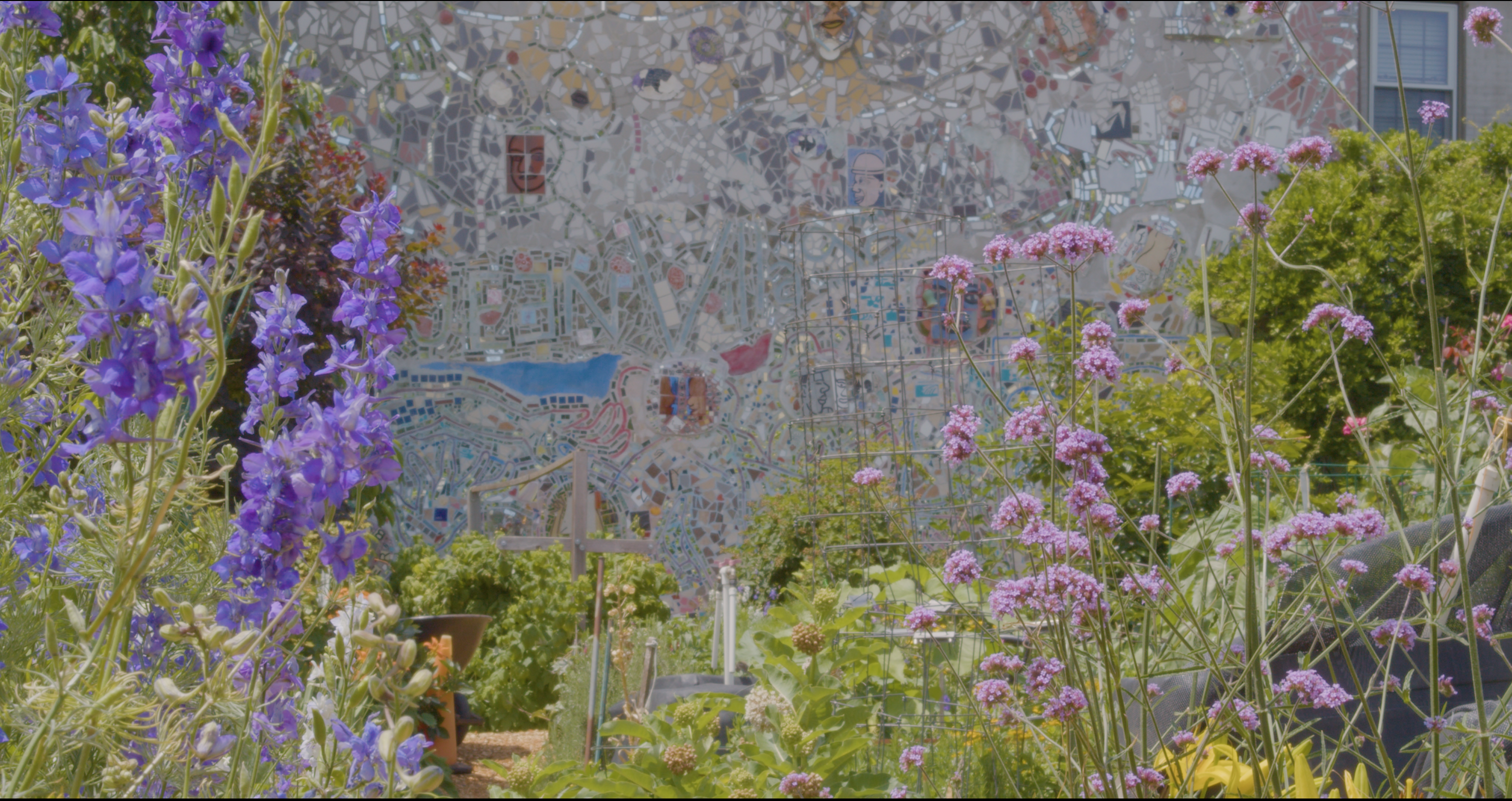
    3D Rendering of Isiah Zagar’s Mural near the West Side Gate

    SQV

    in

    Summer

    Watch Documentary
    John’s Story

    One blazing hot afternoon in the garden, I was finishing up gathering some B-roll footage when I noticed a man plucking flowers from a plot that did not belong to him. The fedora alone meant that you couldn’t miss him when he bent down to scavenge for his pickings, and his laugh echoed around all four walls of the garden. It was John—the flower bandit. I called out to him, “John, are you allowed to take other people’s flowers? I think it’s time for our interview!” He ignored my first statement, “You better get me right on camera, Miss Vanessa. You know I’m the star of this place!” Surely, he was right, because I later learned that he’s normally the exception to the rules. We sat at his favorite table by the east side gate. “Here, try these edible flowers. Also, make sure you get this on camera, did you get it?” John forced a purple flower in my face, which I swallowed emphatically, as he stretched open his t-shirt. It read: “HELL IS OTHER PEOPLE.”

    John is a white, middle-class, gay man who has resided in Queen Village for more than 35 years. He has been retired since 2008 and has maintained a plot in the garden since 1984. He lives in an apartment that he bought decades ago—now fully paid off—located just two blocks from the garden lot. Inside, his apartment features stacks of VHS-recorded movies, his preferred form of entertainment since he now has trouble reading and writing. In 2008, John suffered a massive stroke, an event that would forever alter his relationship to the garden.

    After maintaining a garden plot for decades—initially secured for him by Libby Goldstein, the garden’s founder—John’s stroke left him unable to care for his plot. According to the garden bylaws at the time, he was required to relinquish his space and return his key immediately. However, John decided to challenge this policy, arguing that his situation warranted an exception. As he explained, “It was necessary to me, and I needed to be convincing.” For John, the garden was more than just a piece of land—it was part of his identity, one of the few spaces in the city that gave him a sense of belonging. “There are two places in Philly that are like my Prozac,” he told me. “The garden and the Italian Market over on 9th Street.” His attachment to the space wasn’t just about gardening; it was about continuity, familiarity, and maintaining a connection to a life he feared losing after his stroke. Some gardeners supported him, offering to maintain his plot while he recovered, while others viewed his inability to contribute as a decline in the garden’s quality. Ultimately, the garden agreed not only to make an exception for John but to rewrite the bylaws to accommodate other medical crises in the future. Yet, despite this policy change, John was given only “one and a half years” to get back on his feet— a timeframe he did not consider adequate. The compromise, though framed as an act of flexibility, underscored the garden’s tension between communal care and strict adherence to productivity norms.

    John successfully leveraged his deep-rooted relationships within the community to secure an exemption, leading to a formal amendment: the introduction of the Emeritus Gardener status, which allowed individuals to retain membership indefinitely even through periods of illness or incapacity. The president at the time justified this by stating it was “what was best for the garden,” despite a long waiting list for entry. However, while John’s victory affirmed his sense of belonging, it also revealed the selective nature of self-governance: where rules bend for those with social capital but remain rigid for others (Eizenberg 2012, 770). Over time, his presence became a point of contention rather than celebration, as fellow gardeners feared that his exception would encourage further challenges to long-standing rules. He had secured his place through negotiation and influence, but in doing so, he disrupted the balance of governance and found himself increasingly resented. According to fellow gardeners whom I asked about John, his friends in the garden grew distant. I witnessed their conversations tapering off when he approached. People muttered about his neglected watering duties, assuming he could no longer keep up. And after his stroke, his reluctance to wake before 9 a.m. for Saturday cleanup became another quiet mark against him, unspoken but understood, a widening gap between him and the community he had once moved so easily within.

    As John grew more estranged from the garden community, his approach shifted from strategic negotiation to a bid for control through acts of resistance. He began subtly challenging the garden’s authority through minor transgressions—I witnessed him stealing flowers, but he also frequently skipped meetings and made pointed remarks to unsettle others, such as, “So many of these people don’t care about their plots and never show up when they are supposed to. It’s an absolute disgrace, and worst of all, I’m not supposed to go in to fix their shit!” These acts, small but deliberate, align with Scott’s (1985) concept of “hidden transcripts” of resistance: everyday forms of dissent that push back against authority without direct confrontation (Scott 1985, 34). 

    His mere presence in the garden, despite mounting hostility, became an act of defiance. After being criticized by his fellow gardeners for his perceived unproductivity, John now wields their own jargon against them, “Everybody here seems to know what they’re doing. And if they don’t, they’re useless—unworthy of my attention.” His words reflect the unspoken hierarchy within the garden, where participation is tied to worth and those deemed unproductive are subtly pushed to the margins. By echoing their own language, he exposes the harshness of their judgment while simultaneously shielding himself from further criticism. His tone blurs the line between sarcasm and sincerity—mocking their rigidity while also resigning himself to the very exclusion he resents. Where he had once belonged through social capital, he now belonged through sheer endurance, forcing the community to reckon with the contradictions of its own governance.

    Over time, John’s mere presence in the garden, in the face of mounting hostility, became an act of defiance. After being criticized by his fellow gardeners for his perceived unproductivity, John now wields their own jargon against them, “Everybody here seems to know what they’re doing. And if they don’t, they’re useless—unworthy of my attention.” His words reflect the unspoken hierarchy within the garden, where participation is tied to worth and those deemed unproductive are subtly pushed to the margins. By echoing their own language, he exposes the harshness of their judgment while simultaneously shielding himself from further criticism. His tone blurs the line between sarcasm and sincerity, mocking their rigidity while also resigning himself to the very exclusion he resents. Where he had once belonged through social capital, he now belonged through sheer endurance, forcing the community to reckon with the contradictions of its own governance.

    John’s presence is tolerated but appears necessary in the garden as a counterpoint that allows the group to reinforce its collective identity. John tests the garden’s ideals: if the community prides itself on being an inclusive space, what does it mean to remove someone who actively challenges that inclusivity? Would expelling him contradict their stated purpose? Instead, his continued presence forces the gardeners to constantly renegotiate what “belonging” means—and for now, they seem willing to keep engaging in that negotiation rather than sever ties completely. One of his plot neighbors, despite being aware that he steals her flowers and admitting that she finds him “a lot” and occasionally annoying, still insists she wouldn’t want to see him gone. “He keeps things interesting and everybody on their toes,” she told me. While his presence is disruptive, it also provides a kind of entertainment—a reminder that the garden is not just a space of cultivation but a site of ongoing social negotiation and pleasure. 

    When I asked John about his contributions to the community, he mentioned that he waters a couple’s plot when they go on trips. This couple, his plot neighbors at the end of the aisle, were about to head to Turkey for two weeks. He smiled and said, “I’m going to be watering them and picking EVERYTHING out of their plot. Their plot is going to be denuded when they get home.” His language shows the retaliation tactics of his defiance that he wields on whomever he chooses.

    His experience reveals the contradictions of self-governance: the very mechanisms that once allowed him to negotiate an exception—flexibility, communal decision-making—ultimately became the markers of his exclusion. While no one has formally removed him, he has become increasingly alienated. The criticism of his unproductivity suggests that other members have begun to devalue his presence, shifting him from a participant to an outsider. His sarcastic appropriation of their language—“unworthy of my attention”—is a defensive response to this shift, a way of both mocking and reflecting the exclusion he feels. Members may no longer include him in conversations about garden decisions, reinforcing his estrangement. Meetings and group activities continue without him, and while others may avoid direct confrontation, their disapproval is evident in subtle cues: pointed comments, withheld invitations, and a growing sense that his presence is more tolerated than welcomed.

    Beyond social marginalization, John has also been cut out of the informal networks of mutual assistance that sustain the garden’s social economy. While he notes that he waters a couple’s plot when they go on trips, his retaliatory remark about “denuding” their garden suggests that these acts of care are no longer purely reciprocal. His participation in the exchange of favors has become transactional, even adversarial, an inversion of the cooperative ethos that once defined his place in the community. Do others hesitate to rely on him? Has the trust that once underpinned his relationships eroded? If so, he has, in effect, been rendered expendable—not through formal expulsion, but through a slow withdrawal of social capital.

    His presence in the garden remains, but his belonging has been revoked. The same communal flexibility that once made space for him has now tightened its boundaries, revealing an implicit threshold for inclusion. His defiance may keep him physically anchored in the space, but it does not reverse his exclusion—it only makes it more visible. His struggle is not merely legal but deeply social, illustrating how power in these spaces is not just inscribed in bylaws but enacted through informal networks of acceptance and exclusion. His Emeritus Gardener title was not a right but a contested privilege, underscoring the precarious nature of self-governance, where belonging is continually renegotiated (Eizenberg 2012, 773).

    Storyboarding the documentary
    Lily’s Story

    Lily is a white, senior resident of the Fishtown neighborhood in Philadelphia. She and her husband previously rented an apartment on Christian Street, where the SQV garden is situated, and became members of the garden in 1978. After retiring as a Head Start preschool teacher at Settlement Music School next door, Lily spends the majority of her time in the garden, takes great pride in her garden plot, and boasts about her community involvement. 

    Sun streaming through the large vines that twisted and dangled from the lattice of the community-built grape arbor, Lily explained her strategies for success in the Southwark Queen Village community garden. Most people, she said “beat around the bush”; she goes to the heart of the matter. Most people “don’t have the courage of their convictions,” but “I know where I stand all the time.” Being prepared, presenting herself as better informed, better dressed for the work at hand, and more powerful, “I always get my way.” Being in control is important to Lily. “I want the gardeners to be reassured that not everyone is ignorant when it comes to this place.” 

    In the early 1980s, Lily and her husband had a child of their own. As housing prices began to rise in the neighborhood, they could no longer afford to live in Queen Village and were forced to look outside the boundaries of the Southwark Queen Village Garden neighborhood. Lily’s circumstance meant one thing: according to the bylaws, she would have to give up her plot and be in search of a new community garden in Philadelphia. However, Lily did not want to accept that reality. She adores her friends at the Southwark Queen Village Garden, stating they are her “closest companions.” Over the years, Lily “served every office position held in the garden.” She has been co-chair, row captain, recording secretary, and garden treasurer. As a woman of high rank amongst the gardeners, a banishment from the garden was not in the cards.

    Lily’s dominance of labor-intensive roles further entrenched her authority within the garden. She took it upon herself to care for her plot and the garden’s public spaces, a responsibility few were willing to shoulder. Her labor contributions became a key justification for her exceptional status. As she framed it, “Who was going to keep this place functioning, other than myself?” This dynamic creates a self-reinforcing cycle of dependency: the monopolization of labor legitimizes the concentration of authority among those willing to work, while the concentration of authority discourages some others from stepping forward. Lily’s dominance of labor-intensive tasks aligns with Eizenberg’s (2012, 770) argument that labor scarcity can create governance inequalities rather than promoting shared responsibility. By positioning herself as the garden’s primary caretaker, she ensures that governance remains concentrated among those with the time, resources, and historical ties to assert control. This process discourages newer members from stepping forward, reinforcing a hierarchy of necessity rather than a true participatory model of governance. “I have a reputation in the garden for getting involved in things, and people know who I am. When I seek someone out, they generally know that they’re dealing with me, and that they have to deal with me.” 

    Individuals like Lily ensure their indispensability while perpetuating what Brueggemann (1999, 2) describes as the “myth of scarcity,” the idea that access to space, influence, and decision-making within the garden is inherently limited and must be carefully guarded. In reality, this perceived scarcity is not simply a matter of limited physical resources, such as labor, but is ultimately about who controls access to them. Lily’s ability to navigate the informal power structures within the Southwark Queen Village Community Garden was not just about labor but also about strategy, negotiation, and an acute understanding of governance dynamics. She subtly pressured other gardeners to be more available when she needed assistance, reinforcing a sense of obligation. Simultaneously, she complained behind people’s backs about certain individuals being lazy, leveraging these criticisms to strengthen her own authority. By positioning herself as the garden’s most dedicated laborer, she made it clear that her influence stemmed from her ability to dictate the flow of communal labor, and not just her work ethic. Her tactical positioning eventually secured her dominance within the garden’s hierarchy.

    The lease was ending that month, and Libby was very upset that we were going to have to move to Fishtown. She sort of brushed me aside, so I thought to myself, ‘Don’t war with an angry person; all you do is just perpetuate the conflict.’ So, I walked out, handed in my key, and waited just a few short weeks. I was already moved into our new home in Fishtown when one day, Libby called me up and said, ‘Yeah, yeah, I guess you’re back in. This place cannot function without you.’

    Founder: Libby Goldstein

    Lily viewed Libby Goldstein, the garden’s founder, as a skilled and experienced player in the game of contracts, entitlements, and power within the garden but she also saw herself as equally adept at maneuvering through these structures. As she described it:

    She was a leading woman in the community, her name engraved on the mural by Isiah Zagar, and she had ties in the Philadelphia Housing Authority and City Hall. As a previous low-income housing representative, she used to get people evicted out of this neighborhood in a week, and they weren’t even part of this garden! Libby would intimidate them, and she’d get the paperwork pushed through and they’d be gone. So, Libby went into this little song and dance about what she was going to do with gardeners in HER garden that she created from nothing when they did not do the things she wanted them to do. So, I thought, ‘If you want me to persuade you that I have the right to this garden, yeah, we could have that discussion.’ Well, I had no fear that it wasn’t going to work out. She couldn’t evict me.

    Lily’s story highlights how governance in the garden is about who knows how to play the game of influence and negotiation rather than about bylaws or fairness. Lily’s right to the garden was not grounded in legal principles or formal entitlements, nor was it dictated by the SQV bylaws. Instead, it was a strategic entitlement, a claim she justified through her embedded knowledge, her social position, and her ability to manipulate governance gaps to her advantage.

             Her presence during the writing of the garden’s bylaws, her awareness of Libby’s bureaucratic and political networks, and her longstanding relationships within the community positioned her not as a rule-follower but as a rule-maker. By embedding herself within the garden’s governance structures, Lily transformed herself into an irreplaceable figure, reinforcing the reality that power in self-managed spaces is often dictated by who understands how to bend formal laws. 

    Figure 16: Lily pointing out the ripe figs in the fig garden. August 2024 

             To this day, Lily is the only Southwark Queen Village Community Garden member who lives outside the garden’s neighborhood boundary. She is also the only gardener to have held almost all the leadership positions in the garden and looks after more public spaces than any other gardener. Lily’s capacity to sustain her plot despite relocating beyond the neighborhood boundaries illustrates how informal hierarchies can supersede official control. According to Ostrom (1990), persons who substantially contribute to the upkeep of communal resources frequently acquire informal power. Lily’s labor contributions, along with her leadership experience, have solidified her authority, establishing a self-perpetuating cycle of dependency in which labor scarcity legitimizes her power (Scott 1985, 28-29). Later in the interview, Lily states quite defiantly, “There is no justice. You either win or you lose. As long as you can accomplish your objectives, you win. I’m not concerned about justice.” Because people willing to engage in laborious activity were scarce, Lily utilized her skill set as a tool to secure her personal interests in the garden. 

             Lily’s dominance in the garden stems from both her labor and her ability to manipulate governance gaps to her advantage (Eizenberg 2012, 768). By assuming neglected leadership roles, she ensured that governance became dependent on her presence (Eizenberg 2012, 770). Simultaneously, she cultivated long-standing relationships with key figures, reinforcing her ability to override formal bylaws when necessary (Scott 1985, 34). In doing so, she demonstrates how informal hierarchies, rather than official governance structures, dictate participation and access in community spaces (Ghose and Pettygrove 2013, 95; Foucault 1980, 201).

             Rather than resisting authority, Lily constructs her own. Despite relocating beyond the neighborhood, she remains a prominent member of the garden, a testament to how informal hierarchies can override official policies, favoring those with historical and social capital (Ostrom 1990, 101). Her position challenges the notion that self-governance ensures equitable participation. While community-managed spaces are often framed as models of participatory democracy, her ability to circumvent governance constraints reveals how informal hierarchies entrench exclusions (Merry 1988, 880). In urban commons like SQV, access is regulated more so through networks of embedded social and labor dynamics rather than democratically derived bylaws. Those who perform essential tasks, build key relationships, and understand governance loopholes gain authority, often at the expense of broader inclusion (Ghose and Pettygrove 2013, 96). Lily’s experience suggests that participatory governance operates less as a democratic ideal and more as a negotiated practice of power, where authority accrues through labor, knowledge, and strategic positioning rather than universal access.

    Gardening Responsibilties

    Monthly Community Meeting

     Theoretical Frameworks

    Legal Pluralism: Interaction between formal laws and informal norms in governance (Moore 1973; Ewick & Silbey 1998).

    2. Legal Consciousness: How individuals understand and navigate the law—before, with, or against it (Silbey 1998).

    3. Network Theory: Examining power dynamics and social hierarchies within community networks (Granovetter 1983).

  • The Art of Connection

    The Art of Connection

    Welcome to WordPress! This is a sample post. Edit or delete it to take the first step in your blogging journey. To add more content here, click the small plus icon at the top left corner. There, you will find an existing selection of WordPress blocks and patterns, something to suit your every need for content creation. And don’t forget to check out the List View: click the icon a few spots to the right of the plus icon and you’ll get a tidy, easy-to-view list of the blocks and patterns in your post.

  • Beyond the Bylaws

    Beyond the Bylaws

    What are the bylaws?

             The Southwark Queen Village Community Garden’s bylaws reflect a long history of community garden governance that emphasizes structure, order, and shared responsibility (Acton 2011, 47; Crouch 1997, 192). However, as scholars have noted, such regulations often create subtle exclusions, determining who is truly able to participate in these spaces. These guidelines cover membership criteria, meeting requirements, officer elections, row captain duties, committees, garden standards, and general expectations for gardeners. The garden’s goals reflect an ambitious vision: fostering community engagement and collaboration, ensuring fair and transparent governance, promoting equitable access, supporting environmental stewardship, and maintaining a culture of responsibility while providing opportunities for continued involvement. By requiring active participation, encouraging sustainability, and prioritizing inclusivity, the bylaws seek to balance individual gardening pursuits with collective responsibility.

    Who can participate?

             The garden is prioritized for residents of Queen Village, specifically between the Delaware River and 6th Street, and from the south side of Lombard Street to the north side of Washington Avenue. Membership applications are processed on a first-come, first-served basis, contingent on plot availability. If no plots are available, applicants will be added to a waiting list. Returning gardeners from the previous season are annually given first preference to retain their plots or choose vacant ones, provided they sign the Neighborhood Gardening Association (NGA)/Philadelphia Land Trust gardening agreement at the March meeting. A $5.00 registration fee is required each year. Plots for which fees remain unpaid or agreements unsigned by the April meeting are reassigned to applicants on the waiting list. Unless approved by the garden membership, no household may hold more than one plot.

    Monthly Meetings 

    Figure 7: Monthly meeting held outside of the Honey House 

             The garden holds monthly meetings on the second Monday of every month, excluding January and February. Meetings occur at a local church from October through March and at the garden during warmer months. Each meeting lasts one hour. Gardeners are required to attend at least five meetings per season to retain their membership. Attendance is recorded by the Secretary or Assistant Secretary, and voting rights are allocated on a one-vote-per-plot basis.

    The Election of Leadership

             The election of officers takes place at the March meeting. Officers serve two-year terms and may not hold the same position for more than two consecutive terms. The elected positions include Chair, Vice Chair, Treasurer, Recording Secretary, Assistant Secretary, and Sergeant-at-Arms. Along with the row captains, these officers form the Garden Council, responsible for oversight and decision-making. Row captains are appointed volunteers, one per row, tasked with ensuring the upkeep of their respective areas. They monitor individual garden plots for weeds and debris and ensure the paths on either side of the row remain clear. Row captains also notify gardeners of clean-up days and special events. Assistant row captains may also be appointed as needed.

    The Bylaw & Inspection Committees

             Two committees play a key role in maintaining garden order: the Bylaws Committee and the Inspection Committee. The Bylaws Committee, chaired by the Vice Chair, reviews proposed bylaw amendments and requires a quorum of five members to pass recommendations. Suggestions can be presented by any gardener during membership meetings. The committee meets on the first Monday of the month as needed. Meanwhile, the Inspection Committee—composed of the Chair, immediate past Chair, Urban Gardening Advisor, Treasurer, and two row captains—ensures plots and aisles remain clean, hazard-free, and weed-free. This committee conducts an annual inspection in August and issues warnings to non-compliant gardeners, following up through row captains.

    Garden Rules & Responsibilities

    Figure 8: Garden duties posted inside the tool shed 

             The garden enforces clear criteria to maintain orderly plots and pathways. Gardens must be planted by May 1 to retain ownership, with non-compliant plots reassigned to applicants on the waiting list. Gardeners are responsible for weeding, mulching, and clearing not only their plots but also the surrounding paths. Each member is expected to work at least five hours per week on their plot and adjacent areas. Trash removal is the gardener’s responsibility, with specific guidelines for bagging and placement for Friday pickup and separate recycling on alternate Thursdays. Any gardens left uncared for and in weedy condition by August 5th will be cleared and reassigned. Growing or using illegal substances results in immediate expulsion with no refund of plot fees. Pesticide use is strictly regulated under NGA guidelines, and violations will result in forfeiture of the plot.

             The general rules emphasize community participation and cooperation. All gardeners must contribute to collective garden activities, including clean-up days, garden judging preparation, and social events such as Spring Fest and the Harvest Show. Specific prohibitions include digging for worms in the garden and entering other members’ plots without permission. Pets are allowed but must remain leashed, and owners are responsible for cleaning up any droppings. If a gardener is temporarily unable to maintain their plot due to health, vacation, or work commitments, they must inform their row captain and arrange for a substitute gardener, who must also comply with the NGA rules. Gardeners are required to sign the rules acknowledgement form and return it to the Assistant Secretary before they can begin working on their plots. This formalized system ensures that the garden remains a well-maintained and cooperative space that serves the community fairly and effectively.

    Figure 9: Photo of advertisement for the Harvest Show found in garden shed, Spring 1977

    SQV Bylaws: Formal Rules, Informal Power

    The bylaws formally establish hierarchy within the garden, structuring its organization while also creating inequalities in participation, power, and responsibility among members. Leadership positions—including the Chair, Vice Chair, Treasurer, and row captains—hold formal authority over governance, centralizing decision-making within the Garden Council. This concentration of power can marginalize the voices of regular gardeners, particularly when leadership prioritizes external perceptions of the garden over internal member concerns.

    Figure 10: NGT land trust agreements, meeting minutes found in tool shed 

    As former president and original SQV member Lily describes, the garden’s status as “a keystone space” stems from its long history and perceived success: “The garden acquired its keystone status through its age. We are successful, our bylaws are (if not overwritten) well taken care of.” In preserving this reputation, leadership focuses on maintaining the garden’s aesthetics—such as the visual appeal of its landscaping, plant arrangements, and overall upkeep—as well as its online presence, which includes curated social media posts, website updates, and digital outreach that shape its public image. Lily’s emphasis on the garden’s status as a keystone space underscores how leadership’s priorities often lean toward preserving legacy and aesthetics rather than addressing inequities in governance. This focus on external perception can sideline efforts to make participation more accessible to new members or to reconsider entrenched rules that reinforce exclusivity.

    However, beyond formal leadership, informal mechanisms also shape governance and participation within the garden. One of the most influential of these is The Plot Press, a monthly newsletter written by Lily, which operates as both an informational resource and an informal governance tool. While framed as a community bulletin, The Plot Press also serves to reinforce labor expectations, aesthetic priorities, and collective norms. Through reminders about watering schedules, compost usage, and weeding responsibilities, the newsletter encourages participation while also regulating behavior.

    Figure 11: The September 2024 Plot Press, distributed as the community bulletin

    For example, in the September 2024 edition, a section titled “Water Water Everywhere!” reminds designated members of their watering duties, ensuring that collective responsibilities are publicly acknowledged and expected to be fulfilled. This type of public documentation of participation (or lack thereof) functions as a soft form of enforcement, creating social pressure to conform. While some gardeners appreciate these reminders as helpful guidance, others perceive them as indirect reprimands, reinforcing a division between “engaged” and “less engaged” members.

    This aligns with Foucault’s (1980, 104) concept of disciplinary power, where governance is enacted not just through formal rules and leadership structures, but through peer surveillance and collective reinforcement of norms. While bylaws outline the official regulations for garden maintenance, The Plot Press operates as an informal tool for regulating behavior, subtly reinforcing the hierarchy between long-standing members who set expectations and newer members who must adjust to them.

    Through The Plot Press, Lily’s voice becomes a form of authority, shaping not only what work gets done but also who is perceived as contributing to the community and what counts as contribution. Her influence extends beyond the newsletter; many gardeners reflexively comply with her directives, rarely pushing back against her authority, and her voice is consistently one of the loudest at monthly garden meetings. This influence is not just about organization but also about control: Lily is often quick to judge who is new in the space and struggles to bridge that gap with newcomers. Her social presence reinforces exclusivity, as seen in her weekly Italian lessons held in the grape arbor each summer, where she and a close-knit group of older gardeners gather, explicitly excluding others from using the space during these sessions. 

    This informal but deeply entrenched power structure means that members who fall behind on shared expectations—whether due to time constraints, physical ability, or differing gardening practices or aesthetics—may experience social pressure to conform. The combination of formal bylaws and Lily’s informal authority raises important questions about who gets to define “active participation” and how these definitions serve to reinforce existing power structures within SQV. By controlling not just the work but also the social and spatial dynamics of the garden, Lily’s presence highlights the ways in which governance operates not just through rules, but through everyday interactions and implicit gatekeeping.

    Row Captains 

    Figure 12: An aerial shot of the garden: individual rows are each governed by individual row captains

    Row captains serve as intermediaries between garden leadership and individual gardeners, ensuring adherence to rules and conducting member oversight. Though they are appointed volunteers, they hold a unique position within the garden’s governance, simultaneously acting as facilitators and enforcers. When prompted, many row captains appreciated their promotion to this position, with some viewing it as an opportunity to “work with” others in their row, while others valued having legitimate influence over how their row compared aesthetically to others. However, this role creates a dynamic in which many gardeners feel monitored or judged by their peers.

    This form of oversight aligns with Foucault’s (1980, 104) theory of disciplinary power, where governance is enacted through surveillance and normalization. Rather than relying on direct penalties, the garden’s leadership ensures compliance by embedding authority within trusted figures—row captains—who both facilitate and enforce behavioral expectations. The tension between formal rule enforcement and personal autonomy is evident in the experiences of gardeners like Rebecca and John, who represent two contrasting relationships to authority within this system.

    Rebecca, for instance, resisted a row captain’s directive that she “needed to weed and water her plot more often,” insisting that she did not have time for that. Her response reflects a challenge to hierarchical authority, asserting her own discretion in tending to her plot rather than adhering to externally imposed expectations. This act of defiance aligns with James C. Scott’s (1985, 29) concept of everyday resistance—small, subtle refusals to conform to dominant expectations—but its ultimate effect is more complex. While her refusal to comply challenges the imposed hierarchy, it does not necessarily dismantle or alter the system itself. Instead, her resistance functions as an assertion of personal autonomy within a structure that continues to operate as intended. The row captains retain their authority, and the broader governance system remains intact.

    Figure 13: Rain barrel watering system inside the garden

    However, the significance of Rebecca’s defiance lies in its symbolic and relational impact. By rejecting the demand to weed and water more frequently, she highlights the limits of enforcement—authority within the garden relies on compliance rather than formal penalties. If enough gardeners resist in similar ways, it could create a broader pattern of pushback that erodes the legitimacy of row captains as enforcers. Conversely, individual acts of defiance like Rebecca’s may also mark certain gardeners as noncompliant, further entrenching informal hierarchies where those who do not conform are subtly excluded from decision-making spaces or viewed as less invested in the garden’s collective vision.

    In contrast, John exemplifies the opposite perspective: rather than resisting enforcement, he actively invokes it to regulate others. Calling certain plots in his row “a piece of shit,” he expected row captains to reprimand those gardeners, reinforcing the idea that authority should not only maintain order but also uphold specific aesthetic and labor standards in the space. This aesthetic emphasis reflects Bourdieu’s (1984, 57) concept of cultural capital, where tidiness, structure, and visual order are associated with legitimacy, even when such standards may exclude or burden certain members. While some gardeners see oversight and the imposition of a specific visual aesthetic an infringement on personal freedom, others view it as a necessary tool for maintaining collective order—reinforcing the garden’s implicit power structures. The divide between Rebecca’s resistance and John’s embrace of enforcement mirrors broader class-based distinctions in urban land use and environmental stewardship: some prioritize flexibility and self-determination in tending to their plots, while others see order and compliance as essential to maintaining the garden’s reputation and function. Together, these cases reveal the dual function of row captains: facilitators and enforcers whose authority is both challenged and weaponized, depending on individual gardeners’ perspectives on hierarchy and governance.

    Voting 

    The Bylaws Committee, led by the Vice Chair, and the Inspection Committee, composed of senior members including the Chair, past Chair, and row captains, formalize hierarchy within the garden by controlling rule amendments. While the one-plot, one-vote system may appear democratic, it disproportionately privileges gardeners who control individual plots, marginalizing those who share spaces or lack the ability to consistently attend meetings. Although any member can raise concerns about potential rule changes, the Bylaws Committee is not required to take up every issue, creating frustration among some gardeners who feel their voices are not adequately heard.

    This system mirrors Young’s (1990, 56) critique of procedural democracy, which argues that formal equality does not necessarily translate into substantive inclusion. While each plot technically has an equal vote, the system benefits those with direct ownership, reinforcing existing power structures. This structure disproportionately benefits older, long-term members—many of whom are wealthier homeowners—while newer, younger, and often female or working-class gardeners have less decision-making power. As Horst and McClintock (2019) argue, urban green spaces often become sites where middle-class homeowners consolidate control over land, shaping access and participation in ways that favor stability over inclusion. This results in governance structures that, while seemingly neutral, reinforce systemic inequities in land use and urban citizenship.

    As voting privileges in the garden are tied to tenure and stability, those with precarious schedules or fewer social ties often find themselves at a disadvantage in governance decisions. Cindy’s experience exemplifies this, despite sharing a plot with Maggie for years, her perspective was overruled when Maggie opposed installing solar panels, illustrating how shared labor does not always translate into shared decision-making power. This reflects a broader pattern in which authority in community spaces is shaped more by entrenched social networks than by formal rules, making it difficult for those without longstanding influence to challenge dominant voices (Young 1990, 57,91; Abendroth & Weck 2020, 119). Similarly, Jake, a longtime member, attempted to shift this imbalance by taking on leadership roles and advocating for turnover policies to address the garden’s eight-year waiting list. His proposal to impose a five-year limit on plot retention, modeled after another community garden, was dismissed outright, reinforcing how leadership prioritizes stability over inclusivity. As he put it:

    I took up the role of row officer a few times, and that’s also helped me get to know people because I found myself actually having to learn their names. It was good to understand why people are gardening, what their problems are and what they like or dislike about the garden. However, seeing the same faces all the time made this place start to feel dull. I knew that the waiting list was getting bad and a woman came from Neighborhood Gardens Trust to judge our space. I decided to raise my concern to her about the eight year waiting list. She told me that the garden up in Fairmount had a limit of 5 years for retaining a plot before you had to give it up. I floated the idea here, and it was not taken well. Yeah, I might as well have been talking to a wall. If only there were real lawyers handling these bylaws. At least the committee didn’t throw things at me. 

    Jake’s frustration—feeling as though he was “talking to a wall”—underscores the rigidity of SQV’s governance, where procedural fairness masks an informal hierarchy that favors established members. 

    While the Bylaws Committee and Inspection Committee serve a regulatory function, their discretionary power over rule amendments raises broader concerns about how governance at SQV operates in practice. Despite its appearance of democratic decision-making, the system ultimately consolidates power among long-term members, reinforcing an informal hierarchy where tenure and social capital dictate whose voices are heard. While members like Cindy and Jake attempt to participate in governance, their experiences illustrate how entrenched structures resist change, favoring stability over inclusivity. This dynamic highlights a core tension in SQV’s governance: while the garden presents itself as a community-driven space, decision-making power remains concentrated among those with the longest-standing presence, shaping not only policies but also access to resources and participation itself.

    SQV Bylaws & Informal Hierarchy 

    The informal hierarchy within the Southwark Queen Village Community Garden is predominantly shaped by social dynamics and participation patterns that extend beyond the formal governance specified in the bylaws. My fieldwork indicates that established garden members frequently possess greater influence in decision-making, affecting everything from plot assignments to leadership roles and enforcement of rules.

    Lily, who we met earlier in the chapter, exemplifies how tenure and presence confer influence. For years, she has taken responsibility for maintaining the west entrance, a space designated in the bylaws as a “community area” intended for shared upkeep. Yet, rather than rotating among members, its care has become her de facto responsibility. While this reflects her dedication, it also illustrates how labor is often distributed not by formal assignment but by social norms and personal investment.

    This informal control comes with an unspoken burden. She feels an expectation to continue managing the space indefinitely, despite its communal designation. She worries that when she steps away, the entrance will fall into neglect, an anxiety that highlights a structural gap in SQV’s governance. The bylaws outline shared responsibility but lack mechanisms to ensure that collective spaces remain actively maintained. Without clear succession planning or accountability measures, the long-term sustainability of these spaces depends on the willingness of individual members, reinforcing the reliance on informal authority rather than equitable participation.

    For example, Jake and his wife, Wendy, who we also met earlier in the chapter, kindly shared their extra key to the garden with me to conduct my research. During my first day of fieldwork, as I stood outside the locked gate waiting for someone to let me in, Wendy, a longtime gardener, quietly tended to her plot. Noticing me out of the corner of her eye, she bent down to meet me at eye level behind the iron fence and said, “Here is a key, it’s yours for the summer,” before tossing it over. This act of care is what I came to SQV to study: how members extend generosity to some while others struggle for access.

    As a researcher who had received funding to study the garden, I still found myself physically locked out, dependent on an insider’s recognition to gain entry. I had no prior relationship with Wendy, but she knew of me through my advisor at Swarthmore College, who is a close friend of hers. This was our first interaction, yet she had already decided to grant me access. Wendy’s small gesture granted me legitimacy in the space, yet it also underscored how access to the garden is shaped by informal networks rather than any formal policy. Notably, key-sharing was not universal; while I was given easy access through a pre-existing connection, not all members (particularly newer gardeners and people of color) were offered the same. This moment made visible the underlying social hierarchies at SQV, where belonging is negotiated through relationships rather than rights. My introduction to Jake, too, came through Wendy’s suggestion that I interview him, reinforcing how social ties determine not just physical entry but also who is welcomed into conversations about governance and community life.

    This seemingly small act exemplifies what Efrat Eizenberg (2012, 767) describes as actually existing commons, where communal spaces are not inherently accessible to all but rather governed through informal networks of trust and reciprocity. While Wendy’s willingness to share a key reflects a culture of care, it also underscores the unspoken barriers that newer members face: those without existing relationships struggle to gain full access, despite the bylaws’ claim to openness. Even before I set foot inside the garden, it was clear that access was about recognition rather than purely membership: who was seen, who was trusted, and who was included in the garden’s social and political life.

    This informal generosity does not always extend evenly across all members. Newer gardeners, particularly women, people of color, and those with less economic capital, often perceive their opportunities for participation as more restricted. The absence of Black members raises questions about historical patterns of racial exclusion in urban green spaces (McClintock 2019, 474-475). While the bylaws do not formally exclude anyone, the lack of representation suggests that informal barriers—whether cultural, economic, or social—play a role in shaping who enters and feels a sense of belonging in the garden.

     As community gardens across U.S. cities have historically been tied to gentrification and neighborhood transitions, access to these spaces often reflects broader racial and class dynamics in urban land use. As one new gardener, Maggie, shared in our interview: “I come to the garden every week, but I still feel like I’m on the outside. I don’t know who to talk to when I have a question, and I don’t want to step on anyone’s toes.”Similarly, Luis, a Latino gardener, echoed this sentiment: “It’s like there’s an unspoken system—you kind of have to be brought in, not just sign up and expect to be included.” This reflects Sally Engle Merry’s (1988, 872) concept of legal pluralism, where official governance structures exist alongside informal systems of authority and access. The bylaws grant all members equal rights on paper, but in practice, social capital, race, gender, and class shape who is fully integrated into decision-making and who remains on the margins.

    Racial and gendered hierarchies also emerge in leadership roles and decision-making. While long-time members, often white and older, dominate positions of influence such as row captains and Bylaws Committee seats, women and younger members report feeling unheard in discussions about rule enforcement and garden priorities. One Asian female gardener noted: “When I bring up issues, sometimes I feel like I’m being dismissed. Like, they assume I don’t know as much because I haven’t been here as long.” This dynamic aligns with Iris Marion Young’s (1990, 56) critique of procedural democracy, which argues that formal voting structures do not necessarily create substantive inclusion. While each gardener technically has a vote, power is still concentrated among those who have been socially embedded in the garden’s leadership for years.

    These informal exclusions work alongside formal governance to reproduce disparities in participation, making it harder for certain demographic groups—particularly women and people of color—to feel fully integrated into the community garden’s leadership and decision-making processes.

  • Growth Unlocked

    Growth Unlocked

    https://digitalarchives.powerlibrary.org/papd/islandora/object/papd%3A60731

    Why Does the Garden Refuse to Change the Bylaws?

    Institutional Inertia and the Fear of Change

    Many gardeners resist altering the bylaws out of fear that changing one rule could unravel the entire governance structure. This hesitation reflects a broader pattern in self-managed spaces, where tradition is equated with legitimacy and governance is maintained through continuity rather than adaptability (Ostrom 1990, 100). As Ewick and Silbey (1998, 47) argue, self-governed communities often develop legal consciousness that treats existing rules as immutable rather than negotiable, leading to an institutional passivity that favors the status quo.

    At the Southwark Queen Village Community Garden, this institutional stagnation manifests most clearly in the 8-year waiting list, which is often framed as a fair, first-come-first-served system. However, in practice, because so few members leave the garden, the waiting list perpetuates exclusion rather than ensuring equity. It prioritizes long-standing members over new applicants, preventing fresh perspectives and community engagement (Eizenberg 2012, 774). This structure favors stability over participation by new members, reinforcing a cycle where existing members benefit from sustained access while others are indefinitely excluded.

    Kevin Parker articulates this resistance to change, emphasizing the difficulties of implementing a rotating system: 

    The waiting list is a common thing in the city. Some people talk about we should rotate through. I’m not in favor of that. I can see the benefit of rotating through, but we weren’t set up that way. So whatever benefit there is from having that, the change cost to moving to that would be immense. For example, am I going to tell Irene she has to leave her plot and give it up to someone else after 20 years? NO, I’m not doing that right. So the change cost would be too great for us.

    Kevin further justifies the current system by highlighting the privilege of the surrounding area: 

    For the most part, the people on that list can find another place to garden. This is a pretty gentrified and privileged area. So I don’t think the need for plot turnover here is as great as in other communities. I don’t think it should be on this garden to solve the problem of limited supply and seemingly unlimited demand. I think that’s a city issue.

    Rather than advocating for internal changes to governance, Kevin suggests that the solution lies in expanding urban gardening opportunities rather than restructuring existing spaces: 

    There’s other spots, around Queen Village even, where gardens could be created. So I think the solution is more gardens, not to rotate people out. It takes a while to learn how to govern a garden and I feel like we’re just getting good with things now. So I don’t know how governing the garden would go in that case. Everything would have to be completely restructured and I don’t know what it would look like. The garden wouldn’t have common areas in the same way. There’s no gazebo, there’s no grape arbor, there’s no patio. All of those things would have to be restructured and changed. There needs to be more gardens, not less time in THIS garden.

    Kevin’s perspective highlights a central tension in self-governed spaces: the pursuit of stability often comes at the expense of equity and access. His reluctance to change the bylaws reflects a common governance dilemma—structural reforms carry social and administrative costs. Yet, in resisting change, existing power dynamics are reinforced, privileging those already within the system while sidelining those on the margins. Rather than fostering inclusivity, stability becomes a mechanism for maintaining exclusivity.

    Selective Flexibility: Who Gets Exceptions?

    John’s story demonstrates that rules are not fixed but adaptable—depending on who is asking for the change. His Emeritus Gardener status was created specifically to accommodate his case, showing that the system is flexible when it serves those already embedded within it (Ghose and Pettygrove 2014, 1105). This raises a critical question: if the bylaws could be changed for John, why is the same adaptability not extended to others seeking access to the garden?         

    While the board justified John’s exception based on his historical ties to the garden, the same adaptability is not extended to those on the waiting list, even though their exclusion contradicts the garden’s stated values of inclusion and participatory decision-making (Mansbridge 1980, 129). This reveals a fundamental contradiction: If the bylaws were flexible enough to accommodate John, why not reconsider them for the broader community? Instead, they remain an inflexible barrier, reinforcing the paradox that while rules are presented as necessary for fairness, they ultimately serve as tools for exclusion.

    Yet, even when people do officially leave the garden, their absence is often symbolic rather than total. Rebecca a former officer of the garden who we met in Chapter 2, offers a key perspective,

    And it’s incredible, too, that even when people do give up their garden, they still come back, and they still have people that will be willing to give them a key. I think everybody’s really interested. I was—I was an officer. I wouldn’t go so far as to say that every officer is entitled to a key. A lot of people move, some people get sick, and this is the last thing on their mind, you know? We lost to the blue sky some of the dearest neighbors, dearest people I’ve ever known in my whole life.

    Rebecca’s statement underscores how governance within the garden is about more than just land access—it is about social capital and historical presence. People may relinquish their plots, but they may still come to visit and their ability to return is often dependent on who they know and the relationships they’ve built. In this way, formal departure does not necessarily mean loss of access to the common spaces of the garden, reinforcing the unequal application of garden rules. If former members can continue accessing the garden through social ties, then why does the waiting list remain so rigid? This contradiction exposes how rules and bylaws often function as gatekeeping mechanisms, privileging those who are already in the system while excluding those seeking entry.

    The City’s Role in SQV Governance Stagnation

    A significant issue is the difficulty community gardens face in acquiring land through the Philadelphia Land Bank, an entity established in 2013 to consolidate publicly owned vacant land and streamline the transfer process for community-driven projects, including gardens. However, rather than facilitating land acquisition, the Land Bank has been widely criticized for its inefficiency, with long processing times, bureaucratic backlogs, and a failure to prioritize community gardens (Hennessey 2025, 42). For instance, in the 2024 fiscal year, 59 parcels were approved for disposition to gardens, yet not a single one was successfully transferred to a garden’s possession (Hennessey 2025, 45). The underlying issue stems from the city’s tendency to favor commercial development over grassroots community initiatives, with gardens often sidelined in favor of private real estate interests (Roebuck 2024, 33).

    A key challenge for both new and existing gardens is land security—the ability to own or hold long-term leases on the land they cultivate. Fewer than half (44%) of gardens in Philadelphia have secure land ownership, meaning the majority operate under the constant threat of displacement (Philadelphia Urban Agriculture Plan Summary 2023, 4). Without stable tenure, gardeners are hesitant to invest in necessary improvements such as irrigation systems, fencing, or soil remediation, knowing their work could be undone if the land is sold or repurposed.

    Both the Philadelphia Housing Development Corporation (PHDC) and the Philadelphia Land Bank have been criticized for failing to adequately educate the public about how to equitably sell, transfer, or lease public land for community use. This lack of transparency contributes to the difficulties gardeners face in obtaining legal ownership or long-term leases, as the pathways to securing land remain unclear or difficult to navigate (Philadelphia Urban Agriculture Plan Summary 2023, 5). Councilmember Kendra Brooks has explicitly stated that “the Land Bank currently doesn’t function for gardeners or gardens,” underscoring systemic failures within the agency (Roebuck 2024, 36). Gardeners must navigate complex legal and financial hurdles, such as clearing tax liens or securing nonprofit status, just to apply for land acquisition. This has created a paradox where gardens are recognized as valuable community assets but lack the legal means to secure their existence (Hennessey 2025, 49). 

    Furthermore, the city’s past decisions have exacerbated these challenges. In 1997, Philadelphia sold tax liens on over 30,000 properties to U.S. Bank, many of which were later repurposed into community gardens by local residents (Hennessey 2022, 27). However, as property values increased, these gardens became vulnerable to speculative development, with unresolved liens preventing gardeners from obtaining clear ownership rights (Hennessey 2022, 29).

    The city of Philadelphia’s disengagement with community gardens further complicates the issue. Kevin Parker, president of the Southwark Queen Village Community Garden, describes how bureaucratic red tape leaves gardens in a state of uncertainty: “They’ve not been very helpful or communicative. And I’m not a fan of Parks and Rec or the mayor.” His frustration reflects a broader problem in self-governance: gardens are expected to operate independently, yet their ability to do so is often undermined by external bureaucratic inaction. Parker notes that municipal agencies are particularly slow to respond regarding funding opportunities, which hampers gardens’ ability to plan and implement improvements. The failure to provide timely financial support for infrastructure projects such as water access, soil remediation, and fencing installations further exacerbates land insecurity (Philadelphia Urban Agriculture Plan Summary 2023, 4).

    Parker echoes this dilemma, describing how municipal bureaucracy has placed the garden in a “holding pattern,” preventing long-term planning: “Right now they’re not doing too much over there, mostly because we don’t know long term what’s happening… If the parks can be closed, we can’t do too much. So it’s just sort of taking care of any little problems at the moment. There’s nothing major yet.”

    Parker’s words highlight a larger paradox in self-managed spaces: governance is often dependent on external forces, yet those same forces offer little meaningful support or direction. Just as city officials fail to take decisive action regarding garden land security, garden leaders hesitate to modify their own governance structures—resulting in stagnation rather than progress.[1]

    Security vs. Accessibility: The Locked Fence as a Governance Dilemma

    A critical tension in community garden governance is the balance between security and public access. While gardens are intended to be communal spaces, they often remain physically restricted through locked fences, limiting entry to those with approved membership. Kevin Parker acknowledges this contradiction, stating:

    I think it’s unfortunately necessary. I don’t think it could be open. I know… people leave tools, and equipment, people come through and take produce and things. We did have a few times in the past. People scaled the fence and were camping out here.

    This highlights a governance paradox: while the garden promotes shared stewardship and collective participation, access remains tightly controlled. The locked fence physically reinforces exclusivity, much like the 8-year waiting list, ensuring that only approved members benefit from the space.

    Parker recounts an incident where a gardener arrived in the early morning to find an individual camping inside the garden: “Carolyn Scott, who was a beekeeper and gardener… she would come on her own often in the dark, tend to the bees before she went to work, and found a guy. I think he had set up like a hammock.” This incident reflects the complex realities of urban community spaces—gardens are not just sites of cultivation but also contested public spaces where different groups (gardeners, unhoused individuals, urban residents, and city officials) stake competing claims. However, rather than fostering an ethos of openness or collective responsibility, the privatized structure of these gardens leaves members feeling anxious about potential break-ins. With no institutional support for alternative models of access—such as scheduled open-gate days—security concerns become a daily stressor. If open access were normalized, rather than treated as an exception, these fears would likely dissipate. Instead, the restrictive governance model reinforces a cycle of exclusivity, where security concerns justify further privatization, exacerbating tensions between members and the broader community.

    Comparing Governance Models: Overregulation vs. Minimal Structure

    Examining governance models in other community gardens provides insights into how SQV might implement structured turnover without sacrificing community engagement. To better understand the trade-offs of different governance structures, we can compare several community garden models, each with varying approaches to access, oversight, and turnover.

    Comparative Governance Models in Community Gardens

    Community Garden ModelAccess & TurnoverGovernance OversightStrengthsChallenges
    Southwark Queen Village Community Garden (Current system)8+ year waiting list, minimal turnoverSelf-governed with limited external oversightStability, long-term commitment by membersExclusionary, stagnation, limited new participation
    Schuylkill Center Community Garden (Philadelphia, PA)Flexible, members can expand over time; minimal turnoverManaged loosely by employees of the Schuylkill CenterHigh autonomy, minimal bureaucracy, flexible accessLimited collective responsibility, potential for neglect and inequity
    East 4th Street Community Garden (NYC)Tiered membership model with different levels of engagementSelf-governed with structured tiered participationBalances inclusivity with structured governance, multiple levels of participationPotential hierarchy issues, risk of unequal decision-making power
    NYC Green Thumb Program*Requires 20 open hours per week, ensuring public accessManaged by NYC Department of Parks and RecreationPromotes inclusivity, provides funding and resources, supports over 550 gardensRequires adherence to city regulations, potential bureaucratic constraints
    San Francisco Recreation and Parks Dept. Gardens*Drop-in participation, volunteer-based accessMunicipal oversightEncourages public engagement, communal cultivationInconsistent access policies, resource distribution varies
    Neighborhood Gardens Trust (Philadelphia, PA)*Garden access varies by site; no mandated open hoursNonprofit land trust; leaves governance to each gardenPreserves land from development, supports garden autonomyInconsistent rules, limited oversight, exclusion risk
    Berkeley Heights Community Garden (NJ)Annual lottery for seasonal plotsMunicipal oversight by townshipEquitable access, predictable turnoverPotential instability with high demand
    Corey Abrams Community Garden (Revere, MA)Annual lottery; reassignment for rule violationsCity-managed, ensuring transparencyConsistent turnover, fairness in distributionReduced gardener autonomy, requires administrative oversight

    The garden models with (*) are Citywide Governance Frameworks

    Option #1:  Minimal Structure

    President Kevin Parker contrasts the highly structured, rule-driven system at Southwark with the looser governance model of another, much larger community garden. The Schuylkill Center for Environmental Education, located in the Upper Roxborough neighborhood of Northwest Philadelphia, encompasses 365 acres of fields, forests, ponds, and streams, with over three miles of trails for visitors to explore. Within its grounds, the center hosts an organic community garden, providing opportunities for individuals to engage in sustainable agriculture and environmental education. Unlike Southwark, the Schuylkill Center’s community garden operates with minimal governance, allowing members to manage their plots independently. Parker describes the system:

    There’s no governance. It’s run by employees of the Schuylkill Center for Environmental Education… You pay dues for each plot, $65 per plot, and they kind of handle the governance. There’s no cleanups. There’s no nothing.

    This comparison raises key questions about governance: Does more structure ensure fairness and accountability, or does it reinforce exclusion? Conversely, does minimal governance create more opportunities for participation, or does it lead to disorganization and inefficiency? At the Schuylkill Center’s garden, members can expand their access over time, with some cultivating commercial flower farms while others manage multiple plots. In contrast, Southwark’s rigid bylaws, such as the 8-year waiting list, prevent new members from entering, ultimately reinforcing exclusivity rather than fostering community participation (Eizenberg 2012, 765).

    While the Schuylkill Center’s model highlights the benefits of flexibility, it also reveals the potential downsides of under-regulation. A lack of formal governance may foster inclusivity, but it can also lead to uneven maintenance, disparities in plot usage, and a weakened sense of collective responsibility. This raises an important challenge for community gardens: how to balance structure with accessibility. If SQV were to adopt a less structured system, it might shift from a collaborative community space to a collection of isolated plots, where individual members focus on their own cultivation rather than the garden as a whole. This could lead to weakened communal engagement, fewer shared spaces, and reduced investment in the collective well-being of the garden. Currently, SQV operates with an expectation of shared responsibility, but a more loosely governed system could diminish this, making common areas more vulnerable to neglect and increasing tensions over who takes responsibility for infrastructure and upkeep.

    For SQV, shifting to a more flexible model like Schuylkill would not just mean relinquishing tradition and established hierarchies, it could fundamentally alter the way the garden operates; making it more akin to the allotment-style gardens seen in England. The UK’s allotment gardens traditionally consist of individually assigned plots managed by separate households, rather than collectively maintained spaces. These parcels are cultivated primarily for personal consumption, with limited communal decision-making or shared responsibilities beyond basic infrastructure management. In contrast, modern community gardens emphasize collective ownership: shared upkeep, and social engagement; principles that currently define SQV’s governance model.

    Additionally, a shift toward a more autonomous, allotment-style model could raise concerns about safety, general upkeep, and the long-term vision of the garden. Without a structured system for maintenance, some plots may thrive while others fall into disrepair, leading to disparities in plot conditions and overall garden aesthetics. The lack of clear guidelines might also increase conflicts over land use, as some members may prioritize food production, others may cultivate ornamental plants, and some may attempt commercial-scale gardening. Unlike community gardens, which often mediate these differences through democratic governance structures, an allotment-style system could leave such disputes unresolved, creating tensions over resource allocation, pesticide use, or infrastructure development.

    Another potential drawback is the loss of a unified vision for the garden. SQV currently operates with a sense of purpose and coherence, balancing food production, sustainability, and aesthetic appeal within a shared governance structure. A move toward more individual autonomy could fragment how members approach gardening, leading to diverging priorities and potential disputes. Without a governing body to mediate these differing approaches, conflicts could arise over how resources are distributed, how rules are enforced, and what the garden’s long-term purpose should be.

    Option #2:  Tiered Membership Systems

    Another approach that attempts to strike this balance is the tiered membership system, as practiced by some New York City community gardens. For instance, the East 4th Street Community Garden offers two levels of membership: basic Tier 1 members enjoy general privileges such as access to common areas of the garden and participation in workshops, while Tier 2 members are required to perform additional maintenance hours and are granted individual plots or planters. This structure allows for varying levels of commitment and engagement, accommodating both casual participants and those seeking deeper involvement (East 4th Street Community Garden n.d.).

    By providing multiple pathways for participation, tiered systems reduce exclusivity without compromising governance structure. Instead of rigid bylaws that block new members, as seen at Southwark, or a hands-off approach that can lead to disorder, like at the Schuylkill Center, a tiered model offers a middle ground. It ensures that gardens remain both organized and inclusive, demonstrating how governance can be structured to encourage participation rather than restrict it.

    A tiered system preserves governance by maintaining clear rules and responsibilities while allowing for different levels of involvement. Rather than enforcing a one-size-fits-all membership model, it expands access while ensuring that core members still uphold essential garden functions, such as maintenance, dispute resolution, and infrastructure planning. This prevents governance structures from eroding, as decision-making remains anchored in a committed leadership group, while newer or more casual members can still participate in meaningful ways.

    However, a potential challenge of a tiered model is that it may create two distinct communities of users, each with different priorities and levels of investment. Core members, who take on governance and long-term planning, might prioritize stability, upkeep, and structured participation, whereas casual or seasonal members may engage primarily for personal gardening purposes, without necessarily contributing to communal responsibilities. This could lead to tensions over decision-making, resource allocation, and the overall vision for the garden. If not carefully managed, such a system could inadvertently reinforce hierarchies rather than dismantle them, as seasoned members retain disproportionate control while general members remain on the periphery.

    To mitigate this risk, tiered governance models must actively integrate different levels of participation into decision-making processes. This could involve creating rotational leadership roles, ensuring temporary members have input in broader garden policies, or implementing structured pathways for general members to take on increased responsibilities over time. When designed thoughtfully, a tiered model enhances accessibility while maintaining governance integrity, striking a balance between inclusivity and the structured management necessary for long-term sustainability.

    Option #3: Citywide Garden Council

    Another model to consider is the establishment of a citywide garden council, as seen in New York City and San Francisco. In New York, the GreenThumb program, managed by the NYC Department of Parks and Recreation, supports over 550 community gardens by providing programming, funding, and material assistance. This centralized support helps individual gardens operate under a cohesive municipal framework, promoting resource sharing and governance (NYC Department of Parks and Recreation n.d.). Similarly, in San Francisco, the Recreation and Parks Department oversees numerous community gardens, offering residents opportunities to engage in urban agriculture within a structured municipal system (San Francisco Recreation and Parks Department n.d.). These models demonstrate how structured governance can support community gardens, balancing autonomy with centralized resources to enhance inclusivity. 

    Meanwhile, the Neighborhood Gardens Trust (NGT) operates as an independent nonprofit land trust focused on acquiring and protecting community gardens for long-term public use. Unlike New York City’s GreenThumb or San Francisco’s Recreation and Parks Department, which provide municipal oversight and funding, NGT prioritizes land preservation, ensuring gardens remain safeguarded from redevelopment while leaving governance to community members. However, this decentralized model can result in inconsistent oversight and purpose, as seen with Southwark Queen Village (SQV), where self-governance often leads to internal disputes and limited policy enforcement.

    Beyond internal governance, municipal regulations play a crucial role in shaping community garden accessibility. New York and San Francisco have implemented structured governance frameworks that contrast sharply with Philadelphia’s decentralized model under the Neighborhood Gardens Trust (NGT). While municipal oversight in New York and San Francisco mandates public access, NGT’s approach leaves access policies to individual garden groups, leading to inconsistencies in who gets to participate.

    Option #4: Open Hours and Public Access

    New York City’s GreenThumb program, managed by the NYC Department of Parks and Recreation, requires participating gardens to maintain at least 20 open hours per week from April to October (NYC Department of Parks and Recreation n.d.). This policy ensures that gardens remain accessible to the broader community, rather than being limited to plot-holding members. The Maple Street Community Garden in Brooklyn, for example, complies with this requirement by opening its gates to the public at designated times, allowing non-members to enjoy the space and participate in programming (Maple Street Community Garden n.d.). GreenThumb’s centralized oversight and funding model ensures that gardens are treated as shared urban resources, rather than exclusive spaces for a select group of individuals.

    Similarly, San Francisco’s Recreation and Parks Department oversees 42 community gardens, promoting accessibility by encouraging communal participation. Some gardens, such as Alemany Farm and In Chan Kaajal, operate on a drop-in model, where volunteers and community members can participate in gardening activities during scheduled workdays, and the produce is distributed among those who contribute (San Francisco Recreation and Parks Department n.d.). This model fosters greater inclusivity, ensuring that gardens serve as public gathering spaces rather than private enclaves. While specific open hours are not mandated, the communal approach encourages frequent participation and engagement, balancing self-governance with city oversight.

    In contrast, Philadelphia’s Neighborhood Gardens Trust (NGT) operates as a nonprofit land trust, acquiring and preserving garden spaces while leaving governance to independent community groups. Unlike GreenThumb in New York or San Francisco’s municipally run system, NGT does not mandate open hours, resulting in varying degrees of accessibility across its gardens. This is evident in Southwark Queen Village (SQV), where membership is restricted to plot holders, and the garden remains locked outside of designated workdays or scheduled events. While NGT’s mission is to protect gardens as shared urban spaces, the absence of access policies means that some gardens—like SQV—operate more like private clubs for longtime members rather than publicly accessible green spaces (NGT n.d.). While NGT ensures that gardens are legally protected from redevelopment, it does not enforce policies that promote public access, making some gardens effectively inaccessible to the surrounding community.

    Examining these different governance models raises key questions: Should community gardens operate as self-regulated spaces accountable only to their members, or should they be required to maintain some level of public accessibility? While the GreenThumb model ensures broader access, it also imposes administrative oversight that some argue limits local autonomy. San Francisco’s more flexible approach fosters communal participation but may lack consistency across sites. Meanwhile, Philadelphia’s decentralized model leaves governance up to individual gardens, allowing for local control but resulting in highly variable levels of access.

    For Southwark Queen Village and similar self-governed gardens, the challenge is striking a balance between structure and accessibility. Instituting limited public hours, forming partnerships with local organizations, or implementing structured visitor programs could offer pathways toward greater inclusivity while maintaining internal stability. As urban community gardens continue to evolve, their long-term success will depend on how well they adapt to the competing demands of stability, autonomy, and equitable access.

    Recommendation for an Adaptive Governance Model

    The governance of the Southwark Queen Village Community Garden reflects larger questions of institutional power: Who gets to decide the rules, and who benefits from them? While rules and structures are necessary for maintaining order and sustainability, they should not serve as tools for exclusion (Mansbridge 1980, 143).

    The SQV bylaws value an equitable governance model. To achieve this, the garden must reassess its current bylaws and practices. First, the 8-year waiting list should be reconsidered to allow for a more dynamic and participatory system, potentially implementing a rotational model or shared plots (Eizenberg 2012, 770). Second, security concerns should be balanced with accessibility. Rather than keeping the garden permanently locked, limited public hours, partnerships with local organizations, or structured visitor programs could provide a more inclusive approach (Ghose and Pettygrove 2014, 1098). Finally, the garden should adopt a more flexible governance model, incorporating periodic bylaw reviews to ensure policies remain responsive to the needs of the community rather than reinforcing the privileges of a select few (Ostrom 1990, 90).

    John’s testimony demonstrates that rules can change when challenged by those with social capital. Yet the pushback and resentment he encountered after he successfully lobbied for change––as well as his current acts of resistance––illustrate that mechanisms for change need to be built into the SQV’s governance structure, rather than remain ad hoc. Instead of relying on selective flexibility, the garden must adopt a systematic approach to inclusivity and fairness. Ultimately, self-governed spaces must evolve, ensuring that governance is not just about maintaining order but about fostering participation, adaptation, and community engagement.

    The Case for a Lottery System: Addressing Governance Challenges

    The exclusionary nature of SQV’s governance is most visible in its rigid waiting list, which extends beyond eight years, preventing equitable access to garden plots. While some members have held plots for decades, the lack of turnover has effectively barred new participants, reinforcing a cycle of exclusivity. This raises an important question: If community gardens are meant to foster inclusion and shared stewardship, should governance structures not be designed to facilitate periodic access rather than indefinite tenure? The answer lies in adopting a more dynamic system, one that balances continuity with adaptability. A lottery-based admissions system could introduce controlled rotation while maintaining governance stability and equity.

    A lottery-based system presents a structured yet flexible alternative to the rigid waiting list, ensuring that garden plots remain available to a broader range of community members over time. This model would introduce controlled turnover while maintaining continuity, fostering greater inclusion without undermining governance stability. A review of governance structures in other community gardens informs this approach. The Schuylkill Center for Environmental Education, for instance, adopts a highly deregulated system in which plot holders retain indefinite autonomy, but this has led to concerns about resource inequality and disengagement from collective garden upkeep. Conversely, the Norris Square Neighborhood Project operates with structured programming and rotating plot availability, ensuring that participation remains dynamic. These examples highlight the option of a middle ground: a governance model that neither enforces rigid exclusivity nor abandons accountability measures (Eizenberg 2012, 770).

    In the realm of community gardening, the Berkeley Heights Community Garden in New Jersey utilizes a lottery system when applications exceed available plots. Established in 2019, this garden offers 30 plots for rent each season, with applications opening in December. If demand surpasses supply, a randomized lottery is conducted to select new gardeners, ensuring fair access and preventing any single group from monopolizing participation. This transparent approach reinforces the principle that community gardens should serve as shared resources rather than exclusive enclaves (Berkeley Heights Township 2024).

    Similarly, the City of Revere, Massachusetts, manages its Corey Abrams Community Garden through an annual lottery system. Although this garden comprises only 15 plots compared to 67 total plots at Southwark Queen Village, each March, a lottery is conducted to allocate available plots, which become open if a gardener decides to leave or is removed for violating garden rules. Names are drawn from a waitlist, ensuring a transparent and equitable distribution process. This method prioritizes fairness and accessibility while maintaining governance stability (City of Revere 2024).

    By adopting a weighted lottery model inspired by these examples, SQV can address its current challenges of limited turnover and extended waiting lists. Implementing such a system would introduce structured turnover and prioritize long-waiting applicants, active contributors, and new participants in a more equitable manner. This approach aligns with the practices of other community gardens and organizations that manage limited resources through transparent allocation systems.

    Currently, the 2024 Garden Plot List and Plot Map reveal that SQV consists of 67 plots, some subdivided into smaller sections. These plots are occupied by a mix of full gardeners, co-gardeners, helpers, and emeritus members. A critical governance issue is that emeritus members retain plots indefinitely despite limited participation, while those on the waiting list remain unable to gain entry. This lack of turnover is at odds with the garden’s stated principles of inclusivity and communal participation. Implementing a lottery system could help mitigate this structural stagnation by ensuring periodic reassessment of plot allocation.

    Figure 21: Southwark Queen Village Community Garden plot map & community areas

    A weighted lottery system offers a practical approach to balancing historical membership with new access. Every three years, the garden would conduct a formal review to determine plot availability, assessing voluntary relinquishment, the eligibility of emeritus gardeners, and the status of underutilized plots. A target of 10–15% plot turnover per cycle would ensure a gradual but meaningful shift toward equitable access. Applicants would then enter a weighted lottery, prioritizing long-waiting applicants, new members, and active community contributors while limiting expansion for existing gardeners. Long-waiting applicants, those who have been on the waiting list for over eight years, would receive three entries in the lottery to recognize their extended wait time. First-time applicants would receive one entry to encourage fresh participation. Community contributors—active garden volunteers who have already demonstrated commitment to the garden—would receive two entries, rewarding participation before securing a plot. Existing gardeners seeking expansion would receive one entry, but only if space allows, prioritizing new members.

    Proposed Weighted Lottery System for SQV Garden

    Weighted Lottery CategoryEligibility & WeightingRationale
    Long-Waiting Applicants (Highest Priority)8+ years on the waiting list → 3 lottery entriesRecognizes extended wait time
    New Applicants (Moderate Priority)First-time applicants → 1 lottery entryEncourages fresh participation
    Community Contributors (Special Consideration)[2]Active garden volunteers → 2 lottery entriesRewards participation before securing a plot
    Existing Gardeners Seeking Expansion (Lowest Priority)Current plot holders requesting an additional plot → 1 lottery entry (only considered if space allows)Ensures balance by prioritizing new members

    Once winners are selected, they could be assigned plots based on size availability and gardening experience. To prevent indefinite monopolization, the system could impose fixed tenures of five years, renewable once based on active participation. After a maximum of ten years, gardeners would need to re-enter the lottery, ensuring periodic turnover while maintaining stability. To further promote accountability and prevent abandoned plots, the system could introduce a refundable deposit, requiring winners to secure their spot financially. An annual participation review would assess whether plots are being actively maintained, with non-compliant members forfeiting their access after two consecutive seasons of neglect. These measures align with Ostrom’s (1990, 101) argument that sustainable commons governance requires institutional adaptability rather than rigidity.

    Kevin Parker, SQV’s president, has expressed concern that bylaw reforms could destabilize the garden, stating, “We weren’t set up that way. The change cost would be immense.” While concerns about continuity are valid, a phased three-year transition would ensure that reforms unfold gradually rather than abruptly. In the first year, leadership would introduce the proposed changes through transparent communication, explaining the rationale behind the reforms and gathering feedback from members. A pilot program could be launched with a small cohort of new members under the updated system, allowing leadership to evaluate its feasibility before implementing the changes across the entire garden. This strategy mirrors the approach taken by the Corey Abrams Community Garden in Revere, Massachusetts, which adopted an annual lottery system to promote fairness while maintaining structured governance (Corey Abrams Community Garden n.d.). The pilot phase would also enable long-standing members to express concerns and propose adjustments before full-scale implementation.

    In the second year, membership openings would expand further, incorporating more gardeners under the new system while maintaining oversight from experienced members. To ease resistance from long-term gardeners, a grandfathering clause could be introduced for those with 15 or more years of tenure, allowing them to retain their plots under the condition that they mentor new members. This model is similar to the Norris Square Neighborhood Project in Philadelphia, which integrates mentorship into its governance system, requiring senior members to help newer gardeners navigate shared responsibilities and sustainability practices (Norris Square Neighborhood Project n.d.). Through this structured mentorship, institutional knowledge would be preserved, ensuring that long-standing members contribute to the community even as new gardeners gain access to plots.

    By the third year, the bylaw changes would be fully implemented, ensuring fair and standardized participation requirements. The grandfathering program would remain in place, gradually phasing out as longtime members retire or transition out of their gardening roles. A final review of the transition would be conducted, making any necessary refinements to balance stability with inclusion. This step reflects best practices observed in community gardens that have successfully reformed their governance structures, such as the Berkeley Heights Community Garden in New Jersey, which uses a municipal lottery system with structured oversight to ensure fairness while maintaining institutional continuity (Berkeley Heights Community Garden n.d.).

    Beyond individual plot allocations, the lottery system could be complemented by a tiered participation model that allows for a broader range of involvement. Instead of viewing gardeners as either full members or outsiders, SQV could introduce categories such as Core Members, Contributing Members, and Visiting Members. Core Members would be full-plot holders with renewable tenure, responsible for governance and community oversight. Contributing Members would assist in maintaining common areas and operations, while Visiting Members would engage in shared gardening initiatives without holding individual plots. This model would allow a larger community to interact with the garden without forcing a rigid in/out membership structure. Additionally, to balance security concerns with public access, the garden could establish limited open hours or a structured visitor program, allowing greater community engagement without compromising plot security.

    Ultimately, adopting a lottery-based governance system would allow SQV to uphold its core values while evolving toward a more sustainable, inclusive model. A lottery system, coupled with tiered participation and scheduled turnover, offers a structured yet adaptive framework. One that prevents stagnation, fosters inclusion, and aligns with the principles of equitable self-governance (Mansbridge 1980, 143).

    In the weeks following my interviews with John, the Flower Bandit, and President, Kevin Parker, I found myself reflecting on how starkly different their perspectives were. John, Kevin, and others viewed governance, access, and tradition through different lenses, yet they all shared a common desire: to remain in the garden “until the cows came home.” This phrase, which I heard repeatedly throughout my conversations, revealed the deep emotional connection members have to this space. It also underscored the need for a governance model that honors long-standing commitments while making room for new participation.

    At its heart, SQV is more than just a collection of plots—it is a place of shared rituals and collective memory. My favorite insight into this community was learning about the weekend gatherings: committed members bringing roast chicken from the grocery store, someone contributing a fruit salad, and the group sitting under the grape arbor with a case of beer until 9:30 or 10:00 on a hot summer night after everyone else had left. These moments reveal what truly binds the garden together—not its bylaws but its relationships.

    This space is a spark of joy for all who are allowed inside, including myself. But as I listened to these stories, I couldn’t help but wonder: Do they want their garden’s memories to stay insular, or do they want them to grow? If I were to leave one parting gift for this community, it would be a call to realign their relationships—to each other, their bylaws, and the city—so that they could welcome new voices into their traditions. Perhaps, of course, with new faces sitting around the table at 10:00 at night, sharing in the warmth and continuity of a truly inclusive community.

    Conclusion: Cultivating Law, Power, and Belonging in the Garden

    Upon initiating my fieldwork at the Southwark Queen Village Community Garden, the act of obtaining a key—both straightforward and symbolically significant—illuminated the meticulous regulation of access to an ostensibly public environment. The key serves as a potent metaphor for the overarching dynamics revealed in this study: formal rules and informal norms converge to determine membership, participation, and authority within urban commons such as SQV. While legislation such as Philadelphia’s 2024 Bill No. 240187 aims to secure land for communal use, they sometimes neglect the more nuanced yet equally significant social institutions that regulate access to these areas. This research demonstrates that community gardens, although frequently presented as inclusive, can perpetuate exclusion based on race, class, and tenure; favoring individuals with historical connections, social capital, and literal keys to the gate. Future research must deepen this inquiry, comparing gardens across neighborhoods and cities to explore how legal pluralism, gentrification, and self-governance unfold in practice. Ultimately, community gardens sit at the intersection of law, land, and belonging, reminding us that equity in urban green spaces demands more than land preservation—it requires confronting the invisible barriers that dictate who gets to enter, participate, and thrive.


    [1] More broadly, Philadelphia’s municipal agencies, including the Philadelphia Land Bank and the Philadelphia Housing Development Corporation (PHDC), have been widely criticized for their slow and opaque processes regarding land transfers and public land leases (Philadelphia Urban Agriculture Plan Summary 2023, 5). These delays create significant obstacles for gardens across the city, particularly in securing funding and long-term land tenure. Bureaucratic inertia not only stalls individual projects but also weakens the collective potential of urban agriculture to contribute to the city’s food security and community well-being, particularly as gardens remain in a state of precarity, lacking formal protections against displacement (Hennessey 2025, 42). Meaningful support for community gardens would involve clearer, more accessible processes for acquiring vacant land, financial assistance for start-up infrastructure, and technical support in navigating city regulations. For existing gardens, support might take the form of grants for water and soil improvements, legal assistance in obtaining long-term land security, or streamlined communication between municipal agencies and garden leaders.

    [2] Volunteers could participate through communal workdays, maintenance tasks, composting, or assisting in garden-led events. Participation would be tracked through sign-in logs or supervisor verification.